What Is the TRIOS Intraoral Scanner?
The TRIOS intraoral scanner is a digital scanning tool used to capture a detailed 3D image of the inside of the mouth. Instead of taking traditional impressions with trays and impression material, the scanner uses a small handheld wand to record the shape of the teeth, gums, bite, and surrounding structures.
The scan creates a digital model that can be used for treatment planning, patient education, restorations, orthodontic care, and dental appliances. This technology can make the process more comfortable for patients, especially those who have a strong gag reflex or dislike traditional impression material.
Digital scanning does not replace a dental exam, X-rays, or clinical diagnosis. It is a tool that helps our team gather more accurate information and plan care with greater detail.
Why Digital Scanning Matters
A clear digital scan helps improve communication between the dentist, patient, and dental lab when a restoration or appliance is being made. Since the scan captures the shape of your teeth and bite, it can help support a better-fitting final result.
Traditional impressions can still be useful in some cases, but many patients prefer digital scans because the process is cleaner, faster, and easier to tolerate. There is no bulky tray filled with impression material sitting in the mouth for several minutes.
Digital scans also make it easier for patients to see what we see. The images can often be reviewed on a screen, allowing our team to explain tooth wear, spacing, crowding, bite changes, restorations, and other visible details more clearly.
A First Visit Focused on Better Information
Your visit at Dental Design Studio begins with an evaluation of your teeth, gums, bite, and treatment goals. If a digital scan would help with diagnosis, planning, or patient education, our team may use the TRIOS intraoral scanner during your appointment.
The process is simple. A small scanning wand is moved around the mouth to capture detailed images of your teeth and surrounding structures. The scanner collects information from different angles and creates a digital model.
Once the scan is complete, Dr. Mannie Badyal and our team can review the images with you. This helps you understand what is being planned, why a treatment may be recommended, and how the scan supports the next step.
What the TRIOS Scanner May Be Used For
The TRIOS intraoral scanner can support many areas of dental care.
Dental crowns
A digital scan may be used when planning a crown for a cracked, worn, weakened, or heavily restored tooth. The scan helps capture the prepared tooth, surrounding teeth, and bite so the final crown can be designed to fit properly.
Dental bridges
Bridges need careful planning because they replace missing teeth while relying on surrounding teeth or implants for support. Digital scanning can help create a model used to design the bridge and evaluate how it fits into the bite.
Dental veneers and Lumineers
Cosmetic restorations depend on tooth shape, symmetry, spacing, and smile balance. A digital scan can help with planning veneers, Lumineers, and other cosmetic treatments.
Clear aligners and Invisalign
Clear aligner treatment begins with understanding current tooth position and bite. Digital scans can help create a model for planning tooth movement and designing aligner trays.
Night guards and mouth guards
Custom guards need to fit comfortably and stay in place. A digital scan can help create a fitted appliance for patients who grind, clench, play sports, or want to protect dental work.
Dental implants
Implant treatment may use digital scanning as part of restorative planning. The scan can help show how the final crown, bridge, or implant-supported restoration should fit with the surrounding teeth.
Inlays, onlays, and other restorations
Custom restorations need to fit the tooth precisely. Digital scanning can help capture the details needed to design an inlay, onlay, or other restoration.
Digital Scans vs. Traditional Impressions
Traditional impressions use trays and soft material to capture the shape of the teeth. Some patients tolerate them well. Others find them uncomfortable, especially if they have a strong gag reflex, small mouth, dental anxiety, or difficulty breathing through the nose during impressions.
Digital scans are different. The scanner captures the teeth with a small wand instead of filling the mouth with impression material. This can make the experience more comfortable and less stressful for many patients.
Digital scans may also allow the dental team to review the image quickly and rescan an area if more detail is needed. With traditional impressions, an impression sometimes needs to be retaken if the material pulls, bubbles, or does not capture enough detail.
Digital Scanning for Crowns and Restorative Dentistry
Restorative dentistry depends on fit. Crowns, bridges, inlays, onlays, and other restorations need to match your tooth shape, bite, and surrounding structures as closely as possible.
The TRIOS intraoral scanner helps capture the details used to design these restorations. This can support better communication with the dental lab and help reduce guesswork in the planning process.
For patients, digital scanning can make restorative appointments feel more straightforward. You can see the tooth being treated, understand how the restoration is being planned, and avoid traditional impression material in many cases.
Digital Scanning for Clear Aligners and Invisalign
Clear aligner treatment requires an accurate model of your teeth. The TRIOS intraoral scanner can capture the current position of your teeth and bite, which may be used to help plan aligner treatment.
This is useful for patients considering clear aligners or Invisalign for crowding, spacing, rotated teeth, or shifting after previous orthodontic treatment. The scan gives our team a detailed starting point before treatment is planned.
Digital scanning can also make the consultation more visual. Patients can better understand tooth position, bite relationships, and why certain movements may be recommended.
Digital Scanning for Night Guards and Mouth Guards
Custom appliances work best when they fit well. A night guard that feels bulky or loose may be difficult to wear consistently. A sports mouth guard that does not stay in place may not provide the protection a patient needs.
Digital scanning helps capture the shape of the teeth so a custom appliance can be made for the patient’s mouth. This may be used for night guards, sports mouth guards, retainers, or other appliances depending on the treatment plan.
A better-fitting appliance can improve comfort, stability, and daily use, which is especially important for patients who grind, clench, or play sports.
Digital Scanning for Cosmetic Dentistry
Cosmetic dentistry is detail-driven. Tooth size, shape, spacing, alignment, gumline position, and bite all affect the final result. Digital scans can help our team evaluate these details before recommending treatment.
For patients considering veneers, Lumineers, bonding, crowns, whitening, gum contouring, or clear aligners, scanning may be part of the planning process. It helps us understand the current smile and discuss what changes may be realistic.
Digital scans can also help patients see why certain treatments may need to happen in a specific order. For example, aligners may be recommended before veneers, or whitening may be discussed before bonding or restorative work.
Digital Scanning and Patient Education
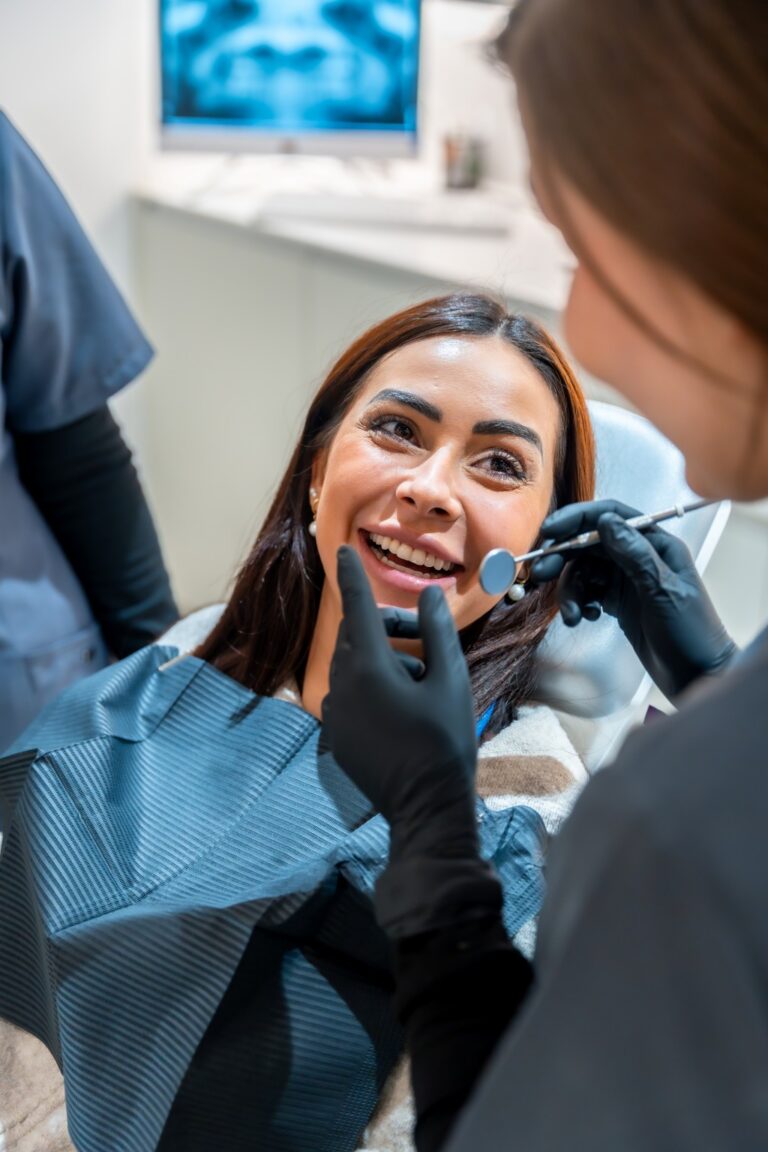
One of the benefits of intraoral scanning is that it gives patients a clearer look at their own teeth. Dental concerns can feel abstract when they are only described out loud. A digital scan can make the conversation more visual.
Our team may use digital scans to show tooth wear, crowding, spacing, bite issues, broken areas, old restorations, and other visible concerns. This can make it easier to understand why a treatment is recommended or why an area should be monitored.
At Dental Design Studio, we want patients to feel informed before making decisions. Digital scanning helps support that approach by making dental care easier to see and understand.
Digital Scanning and Dental Anxiety
Some patients feel anxious about dental impressions, especially if they have had uncomfortable experiences with impression trays in the past. Traditional impressions can feel bulky, messy, or difficult for patients with gag reflex concerns.
The TRIOS intraoral scanner may make the process easier for many anxious patients because it uses a small wand instead of impression trays and putty. The scan is usually quick, and we can pause if needed.
If you feel nervous about dental treatment, impressions, or anything being placed in your mouth, let us know. Our team can explain each step and help make the visit more manageable.
How Long Does a Digital Scan Take?
A digital scan is usually completed quickly, although the exact time depends on what is being scanned and why. A small scan for one tooth may take less time than a full-mouth scan used for orthodontic or restorative planning.
During the scan, our team moves the wand around the mouth to capture the needed areas. You may be asked to bite down or move your mouth slightly so we can capture the way your teeth fit together.
Once the scan is complete, the images can be reviewed for clarity. If a small area needs more detail, it may be rescanned before the appointment continues.
Is Digital Scanning Safe and Comfortable?
Digital intraoral scanning is non-invasive. It does not involve drilling, numbing, or radiation. The scanner captures images of the teeth and mouth surface using a handheld wand.
Most patients find the process more comfortable than traditional impressions. It can be especially helpful for patients with gag reflex concerns, dental anxiety, or difficulty tolerating impression material.
If you have sensitive teeth, jaw discomfort, or trouble keeping your mouth open, let our team know. We can work at a pace that helps you stay more comfortable.
TRIOS Scanner and Same Day Dentistry
Digital scanning can support efficient treatment planning for certain same day dentistry services. When a tooth needs a restoration or a cosmetic improvement, a digital scan may help capture the information needed to plan care more efficiently.
Not every treatment can be completed the same day. Some cases require lab work, healing, gum treatment, root canal therapy, implant planning, or a phased approach. However, digital scanning can help reduce delays in cases where the scan provides the detail needed to move forward.
At Dental Design Studio, we will explain what can be completed during your visit and what requires additional planning.
Membership Options for Ongoing Dental Care
Dental Design Studio offers membership options for patients who want a clearer way to manage dental care without relying on traditional insurance. Preventive visits are important for monitoring teeth, gums, restorations, bite changes, and appliance needs.
Membership options may include preventive care, unlimited emergency exams, and different levels based on routine care, gum health, or dental implant maintenance.
For patients planning restorative treatment, clear aligners, implants, mouth guards, or cosmetic dentistry, our team can review available membership options and help you understand what may fit your needs.
TRIOS Intraoral Scanner Near Dana Park and Downtown Gilbert
Dental Design Studio is located at:
2323 E Guadalupe Rd STE 101
Gilbert, AZ 85234
Phone: 480-621-5535**
Our office is near Dana Park Village Square, Gilbert Road, Freestone District Park, Southeast Regional Library, Gilbert High School, and Gilbert Town Hall & Municipal Center.
We welcome patients from Val Vista Lakes, The Islands, Dana Park, Stonecreek, Freestone Station, Morrison Ranch, Downtown Gilbert, and nearby East Valley communities.
Schedule a Dental Visit in Gilbert, AZ
If you need a dental crown, bridge, clear aligners, Invisalign, veneers, night guard, mouth guard, implant restoration, or a clearer look at your oral health, Dental Design Studio can use digital scanning to support your treatment plan.
Call 480-621-5535 to schedule a dental visit in Gilbert, AZ.
Frequently Asked Questions About TRIOS Intraoral Scanning
What is the TRIOS intraoral scanner?
The TRIOS intraoral scanner is a digital dental scanning tool that captures a detailed 3D model of your teeth, gums, bite, and surrounding structures.
Is digital scanning better than traditional impressions?
Digital scanning is often more comfortable and cleaner than traditional impressions. It can also provide detailed digital models for treatment planning. Some cases may still require traditional impressions depending on the treatment.
Does an intraoral scan hurt?
No. Intraoral scanning is non-invasive and does not involve drilling, numbing, or radiation. A small wand is moved around the mouth to capture images.
What treatments can use digital scans?
Digital scans may be used for crowns, bridges, veneers, Lumineers, clear aligners, Invisalign, night guards, mouth guards, implant restorations, inlays, onlays, and other dental treatments.
Is the TRIOS scanner helpful for patients with a gag reflex?
Yes. Many patients with a gag reflex prefer digital scanning because it avoids bulky impression trays and putty. If you are nervous or gag easily, let our team know before the scan begins.