
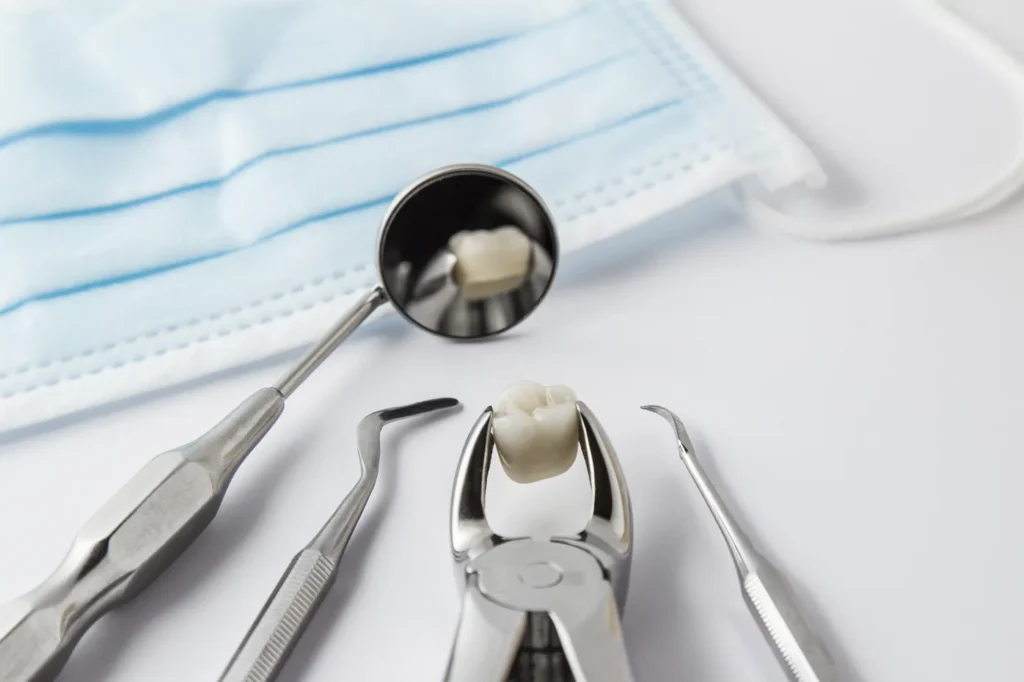

What Does It Mean When a Wisdom Tooth Is Impacted?
An impacted wisdom tooth has not been able to come into the mouth normally. It may remain fully covered by gum and bone, emerge only partway, or grow at an angle because there is not enough room behind the second molar.
Impaction does not automatically mean pain. Some impacted teeth cause no symptoms, while others contribute to infection, decay, gum problems, or damage to the tooth in front of them. What matters is the tooth’s position and what is happening around it, not simply whether it hurts today.
When Is Wisdom Tooth Removal Recommended?
Removal is often considered when a wisdom tooth causes repeated pain or inflammation, develops decay, is difficult to keep clean, contributes to gum disease, damages a neighboring tooth, or is associated with a cyst or another abnormal change. In those situations, the reason for removal is the problem the tooth is creating, not simply the fact that it is a wisdom tooth.
If a wisdom tooth is healthy, properly positioned, and easy to maintain, continued monitoring can be reasonable. No pain does not prove that everything is healthy, but neither does the presence of a wisdom tooth automatically justify surgery.
Do All Four Wisdom Teeth Have to Come Out?
No. One patient may need all four removed, another may have a problem with only one, and someone else may not need any removed. Each tooth should be evaluated based on its own position and health.
If several teeth do need extraction, completing them during the same procedure may be practical, but that decision should reflect the overall treatment plan and your health, not a fixed rule. We can explain which teeth are causing concern and whether there is a reason to treat them together.
What Happens During Wisdom Tooth Removal?
A fully erupted wisdom tooth can often be removed much like another tooth. An impacted tooth can require access through the gum and, depending on its position, removal of a small amount of bone or division of the tooth into smaller sections so it can be removed more carefully.
The area is numbed before treatment. If additional sedation is part of the plan, it is arranged in advance so you receive the right preparation and transportation instructions. More complex impactions are sometimes referred to an oral and maxillofacial surgeon.
Recovery After Wisdom Teeth Removal
Soreness, swelling, and mild bleeding are common during the early part of recovery, but the amount varies with the number and position of teeth removed and how involved the surgery was. A straightforward erupted tooth and a deeply impacted tooth do not have identical recoveries.
Follow the instructions provided for eating, cleaning your mouth, managing discomfort, and returning to normal activity. Soft foods are usually easier at first, and the extraction sites should be protected while the early blood clots and healing tissues form.
Dry Socket and When to Contact the Office
Dry socket occurs when a healing socket loses its protective clot or the clot breaks down too early. The pain often becomes significantly stronger after an initial period of improvement and should be evaluated because that pattern is not considered routine recovery.
Call the office if pain or swelling is worsening instead of settling, bleeding is difficult to control, or you develop fever, drainage, or another concerning change. Difficulty breathing or swallowing or rapidly increasing facial or neck swelling requires immediate medical attention.
Why Wisdom Teeth Are Not Replaced
Wisdom teeth are different from most other permanent teeth because they generally do not need to be replaced after removal. Losing a wisdom tooth does not create the same restorative need as losing a molar or front tooth that plays a larger role in the bite.
Unlike most missing permanent teeth, wisdom teeth generally do not need to be replaced after removal. Once the area heals, an implant, bridge, or denture is usually unnecessary for the missing wisdom tooth.
Frequently Asked Questions
At what age do wisdom teeth come in?
They often begin erupting in the late teenage years or early adulthood, but timing varies and some never fully emerge.
Can I keep my wisdom teeth if they do not hurt?
Possibly. Healthy wisdom teeth that are properly positioned and can be kept clean may simply be monitored over time.
Can a wisdom tooth be impacted without hurting?
Is wisdom tooth removal the same as a regular extraction?
How long does wisdom teeth recovery take?
Recovery varies with the number and position of teeth removed and the complexity of the procedure. Follow the individualized instructions you receive, since one universal timeline does not fit every extraction.
Do all four wisdom teeth have to be removed?
No. One patient may need all four removed, while another may only have a problem with one or two. The recommendation should be based on the position and condition of each tooth, not a rule that wisdom teeth always come out as a set.
Wisdom Teeth Evaluation and Removal Near You
Dental Design Studios provides care at nine locations across the Greater Phoenix area: Apple Tree Dental Studio in Avondale, Arizona Family Dental in Chandler, 75th Ave Dental Studio in Glendale, Happy Valley Dental Studio in Phoenix, Hatcher Dental Studio in Phoenix, Smile Dental Studio in Phoenix, Thunderbird Dental Studio in Peoria, Dental Design Studio of Gilbert in Gilbert, and Scottsdale Dental Studio in Scottsdale.
If your wisdom teeth are painful, swollen, hard to clean, or simply uncertain on an X-ray, an evaluation can clarify whether they should be monitored or removed. You do not need to wait for a severe problem before asking about them.