
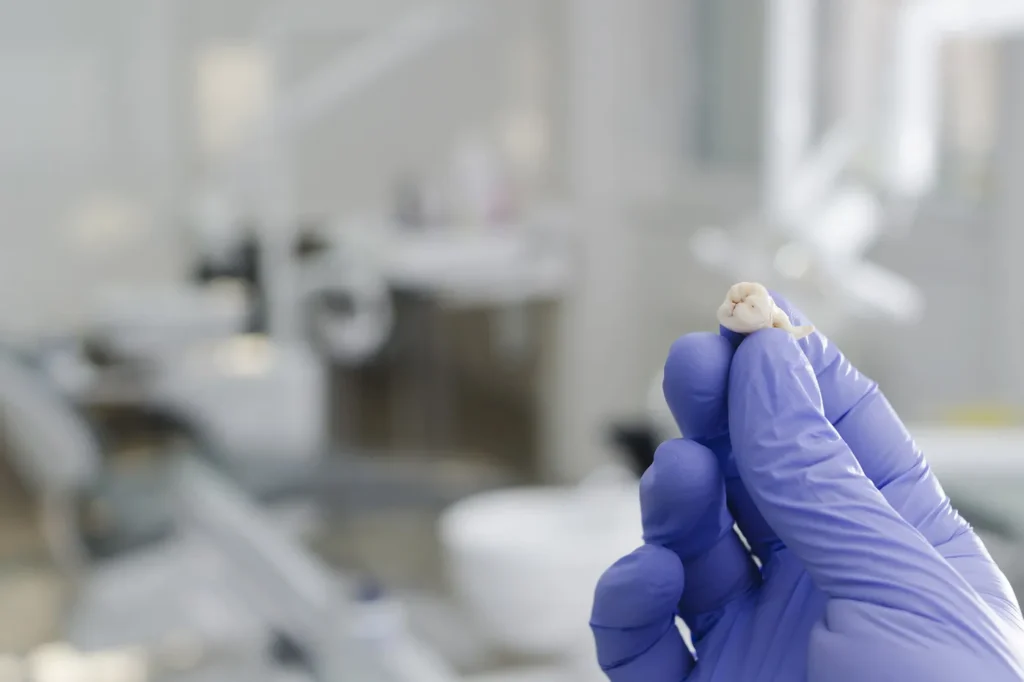

When Does a Tooth Need to Be Removed?
Severe decay, deep fractures, infection in a tooth that cannot be saved, advanced loss of periodontal support, trauma, and certain orthodontic needs can all lead to extraction. The recommendation should come after considering whether the tooth can still be repaired.
A badly decayed tooth may sometimes be restored with a crown. An infected nerve may be treatable with root canal treatment. A broken tooth may still have enough healthy structure to save. Extraction becomes the conversation when those options no longer provide a dependable result.
What Happens During a Tooth Extraction?
Before removing the tooth, your dentist reviews dental X-rays, the position and condition of the tooth, and relevant medical information. The area is numbed so you should feel pressure and movement rather than sharp pain while the tooth is being removed.
Some teeth can be removed relatively simply after they are loosened. Others are more difficult because they are broken, have unusual roots, or sit in a position that requires a more involved surgical approach. If specialty care is more appropriate, the dentist will explain that before proceeding.
Sedation and Preparing for the Appointment
Many extractions can be completed with local anesthetic alone. If anxiety is making the procedure difficult, additional support may be considered. Oral sedation is available at all Dental Design Studios locations, IV sedation can be arranged with a visiting provider, and nitrous oxide is limited to Smile Dental Studio and 75th Ave Dental Studio.
Preparation varies by the sedation plan. Do not assume every extraction requires fasting or a driver. Follow the eating, drinking, medication, and transportation instructions provided specifically for your appointment, and make sure the office has an accurate list of your medications and medical conditions.
What Happens After the Tooth Is Removed?
A blood clot forms in the socket and protects the area while early healing begins. You may be asked to bite gently on gauze to control bleeding, and some soreness or swelling is expected depending on the tooth and how involved the procedure was.
Follow the instructions you receive for eating, cleaning the area, medication, and activity. Softer foods are usually more comfortable at first, and chewing directly on the extraction site should be avoided until the area is less tender.
Dry Socket and Other Reasons to Call
Dry socket can occur when the protective blood clot is lost or breaks down too early, leaving the underlying socket exposed and causing significant pain. Smoking, vigorous rinsing, or disturbing the area during early healing can increase concern, so follow your postoperative instructions carefully.
Contact the office if bleeding is difficult to control, pain becomes substantially worse after initially improving, swelling is increasing, or you develop fever, drainage, or another symptom that concerns you. Difficulty breathing or swallowing or rapidly spreading facial or neck swelling requires immediate medical attention.
Should the Missing Tooth Be Replaced?
Wisdom teeth generally are not replaced after extraction. Other permanent teeth often deserve a replacement discussion because the open space can affect chewing, appearance, and the way neighboring teeth function.
Options may include a dental implant, bridge, or removable denture depending on the location of the missing tooth and the condition of the rest of the mouth. Whenever possible, discussing replacement before the extraction helps you understand the entire plan rather than thinking about the space only after the tooth is gone.
Frequently Asked Questions
Does a tooth extraction hurt?
The area is numbed before the tooth is removed. Pressure and movement are normal during the procedure, while some soreness afterward is expected during healing.
Can an infected tooth be pulled?
Can I drive myself home?
It depends on the type of anesthesia or sedation used. Local anesthetic alone may not require the same transportation plan as oral or IV sedation.
Do I need antibiotics after an extraction?
Not routinely. Antibiotics are used when the dentist determines they are appropriate for the infection, procedure, and medical history.
When should I worry about pain after an extraction?
Pain that becomes noticeably stronger after initially improving, especially when accompanied by a bad taste or other symptoms, should be evaluated.
Tooth Extraction Care Near You
Dental Design Studios provides care at nine locations across the Greater Phoenix area: Apple Tree Dental Studio in Avondale, Arizona Family Dental in Chandler, 75th Ave Dental Studio in Glendale, Happy Valley Dental Studio in Phoenix, Hatcher Dental Studio in Phoenix, Smile Dental Studio in Phoenix, Thunderbird Dental Studio in Peoria, Dental Design Studio of Gilbert in Gilbert, and Scottsdale Dental Studio in Scottsdale.
If a tooth is badly damaged or infected, an examination can show whether it can still be saved or whether removal is the healthier choice. If extraction is needed, we can also discuss whether the space should be replaced and what timing makes sense.