
What Happens During an Oral Cancer Screening?
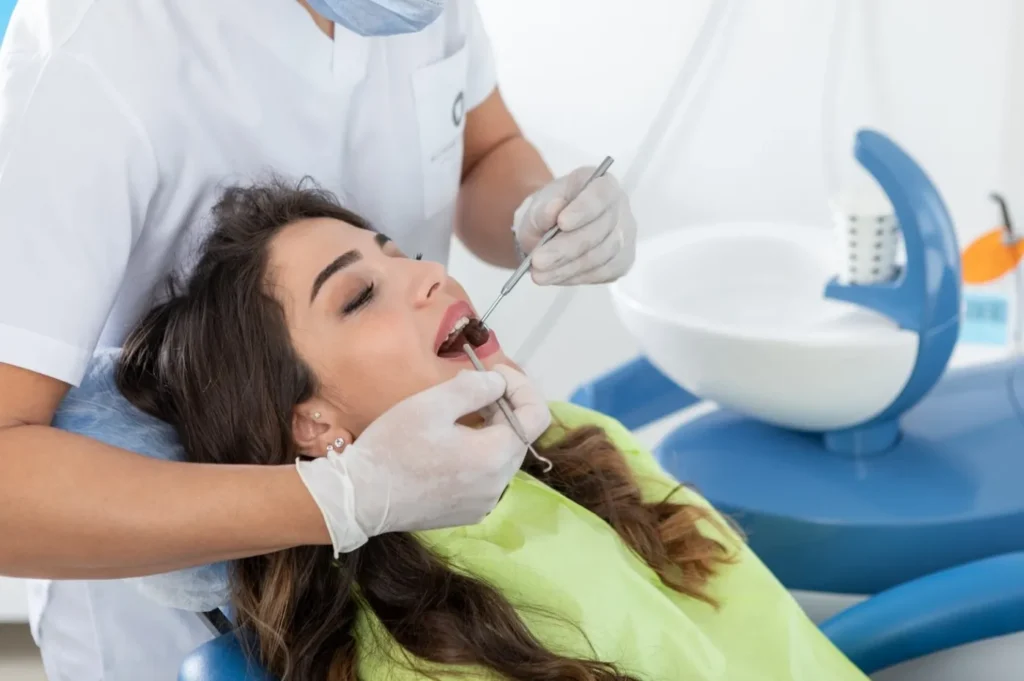
The examination is mainly visual and hands-on. Your dentist looks at the lips, cheeks, gums, tongue, roof and floor of the mouth, and accessible areas toward the back of the mouth and throat. The tongue may be gently moved so the sides and underside can be seen clearly, and the jaw or neck may be felt for unusual lumps or swelling.
For patients who wear removable dentures, the appliances may be taken out so the tissues underneath can be examined. There is no special preparation required, and the screening does not involve drilling or injections. If you already have a tender area, let us know before the exam so we can be careful around it.
Which Changes Should Be Checked?
Persistent sores, unexplained red or white patches, lumps or thickened areas, numbness, unusual bleeding, persistent mouth pain, difficulty moving the tongue or jaw, trouble chewing or swallowing, and new neck lumps are all reasons to seek evaluation. A denture that suddenly fits differently can also be worth checking because changes in the underlying tissues may affect the fit.
Having one of these symptoms does not mean you have oral cancer. Irritation, infection, trauma, dental problems, and many other conditions can look or feel similar. The important point is to pay attention to changes that persist, worsen, or do not have an obvious explanation.
How Long Should I Watch a Mouth Sore?
Many minor mouth sores improve on their own. If a sore, patch, lump, or irritated area lasts longer than about two weeks, it should be evaluated by a dentist or medical professional. You do not need to wait that long if the area is getting noticeably worse, causing significant pain, or interfering with eating or swallowing.
Checking your own mouth can help you notice when something changes, but self-examination cannot tell you what a particular area represents. Some parts of the mouth are also difficult to see without proper lighting and instruments.
Who Is at Higher Risk?
Oral and throat cancers can affect people with different health histories, but risk is higher with tobacco use, heavy alcohol use, certain HPV infections, increasing age, and long-term sun exposure for cancers involving the lip. These factors help guide awareness, but they do not predict with certainty who will or will not develop disease.
Risk factors help guide awareness, but they are not a reason to ignore symptoms in someone who does not smoke or drink. A persistent or unexplained change deserves evaluation regardless of whether you consider yourself high risk.
What Happens If Something Looks Unusual?
Your dentist may first look for a straightforward explanation, such as irritation from a broken tooth, a denture edge, or another local source. Depending on the appearance and history, the area may be rechecked after a period of time or referred for additional evaluation.
When a biopsy or specialist assessment is appropriate, we will explain why. Finding something unusual during a screening is not the same as receiving a cancer diagnosis, and the dental examination itself cannot provide that diagnosis.
Oral Screening and Routine Dental Care
An examination of the mouth can be part of regular preventive care, but you should not wait for your next scheduled cleaning if you notice a persistent sore, lump, patch, or other change between visits. A focused evaluation can be scheduled whenever something new or unexplained deserves attention.
Routine appointments create useful continuity because your dentist can compare what the tissues look like over time. They also provide a natural opportunity to discuss tobacco use, denture irritation, unexplained symptoms, or anything else you have noticed but were unsure whether to mention.
Frequently Asked Questions
Does an oral cancer screening diagnose cancer?
No. It identifies areas that may need further evaluation. A diagnosis may require specialist assessment, imaging, or a biopsy.
Do I need screening if I do not smoke?
Tobacco is an important risk factor, but it is not the only one. Persistent or unexplained changes should be evaluated whether or not you use tobacco.
Does every white or red patch mean cancer?
Can a dentist check for throat cancer?
Should I wait until my next cleaning if I find a sore?
Not if the area persists beyond about two weeks, is worsening, or causes concerning symptoms. Contact the office for an evaluation rather than waiting months for a routine visit.
What happens if the dentist finds an unusual area?
Finding an unusual area does not mean it is cancer. Depending on its appearance, location, and how long it has been present, the dentist may recommend monitoring it, scheduling a follow-up, or referring you for additional evaluation or a biopsy.
Schedule an Oral Cancer Screening Near You
Dental Design Studios provides care at nine locations across the Greater Phoenix area: Apple Tree Dental Studio in Avondale, Arizona Family Dental in Chandler, 75th Ave Dental Studio in Glendale, Happy Valley Dental Studio in Phoenix, Hatcher Dental Studio in Phoenix, Smile Dental Studio in Phoenix, Thunderbird Dental Studio in Peoria, Dental Design Studio of Gilbert in Gilbert, and Scottsdale Dental Studio in Scottsdale.
If you have a sore, patch, lump, or other mouth change that has not gone away, you do not need to wait for your next routine cleaning. Schedule an evaluation so the area can be examined and the next step can be based on what is actually there.