
What Are Dental Veneers?
Veneers are thin restorations that cover the visible front surface of selected teeth. They can change the apparent color, shape, length, width, or proportions of teeth and are commonly considered for chips, worn edges, stubborn discoloration, small gaps, uneven contours, or other cosmetic concerns.
The term laminate is often used as another name for a veneer, not as a completely separate category of treatment. You may also hear the phrase porcelain laminate veneer. What matters more than the label is the material, the amount of preparation required, and whether a veneer is the right treatment for the tooth.
What Can Veneers Change?
Veneers can be useful when several cosmetic concerns overlap. A tooth may be healthy but look smaller than the tooth beside it, have an edge that is worn or chipped, or have discoloration that does not respond well to whitening. Veneers can also help create more consistent proportions across the front teeth.
They do not move teeth the way orthodontic treatment does, and they are not a substitute for repairing active decay or gum disease. If alignment is the main concern, clear braces or SimplyClear aligners may be worth considering before committing to restorations.
Veneers, Whitening, or Bonding?
Professional whitening is the most conservative choice when color is the only concern and the natural teeth are otherwise healthy. Dental bonding can be useful for smaller chips, narrow spaces, uneven edges, or limited shape changes because tooth-colored resin is applied directly to the tooth.
Veneers cover more of the visible surface and can address several cosmetic features at once. There is no reason to choose a veneer when a smaller treatment can accomplish what you want. During a consultation, we can compare what each option changes, how much tooth structure is involved, and how the result would fit with the rest of your smile.
How Is Veneer Treatment Planned?
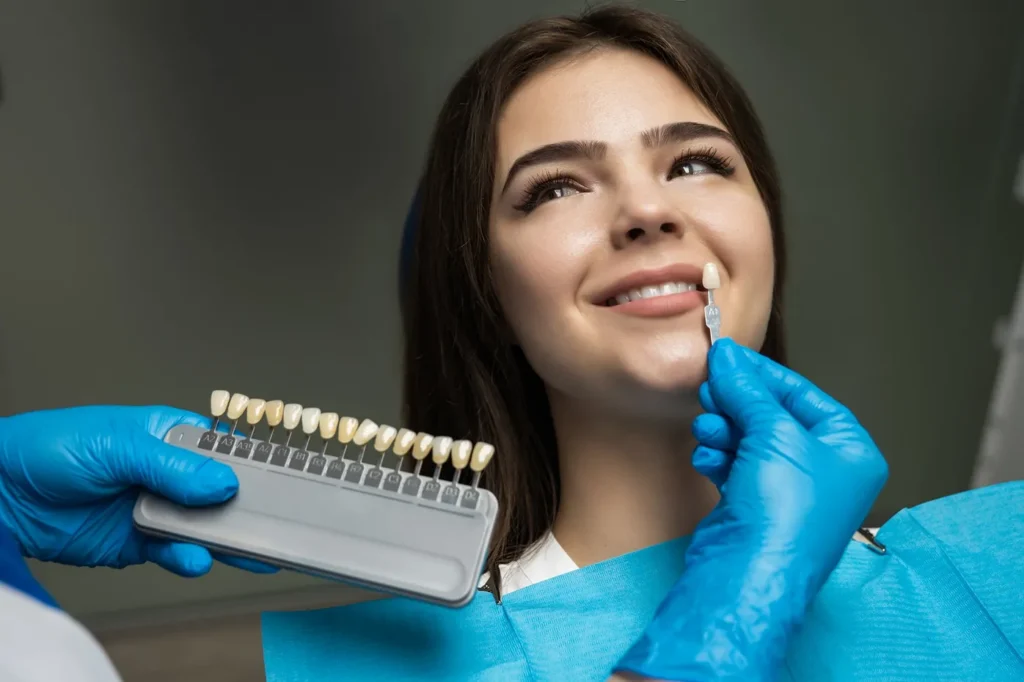
Good veneer planning starts before any tooth is prepared. Your dentist will evaluate the teeth, gums, bite, existing dental work, and the way the front teeth relate to your lips and smile. Photographs and digital records may also be useful when discussing shape, proportion, and shade.
If whitening is part of the plan, it may be completed before the final veneer shade is selected. If orthodontic movement would make the result more conservative, that can be discussed as well. Planning the sequence first helps avoid making one cosmetic decision that complicates the next.
What Is the Veneer Process Like?
Porcelain veneers are typically created outside the mouth and then bonded to the prepared teeth. The amount of enamel that needs to be reshaped varies with the tooth position, the material, and the desired result. Some teeth require very little preparation, while others need more room so the finished veneer does not look bulky.
Composite veneers or bonding-style restorations are built directly on the teeth with tooth-colored resin. They can be useful for selected concerns and may require less preparation, but the materials behave differently from porcelain over time. Your dentist can explain those tradeoffs without treating one material as automatically better for every patient.
What About Lumineers?
Lumineers is a brand name associated with a type of dental veneer. Dental Design Studios does not limit veneer treatment to one branded system; instead, the dentist plans the restoration around the tooth, the cosmetic goal, and the type of veneer that is most appropriate.
If you have specifically heard about Lumineers, bring it up during your consultation. We can explain how that branded concept compares with the veneer treatment currently recommended for your smile without treating the brand name as a separate dental service.
Caring for Veneers
Veneers still depend on healthy teeth and gums underneath and around them. Brush, floss, and keep up with regular dental visits just as you would with natural teeth. Avoid using your teeth to open packages or bite hard objects that could chip either natural enamel or restorative material.
If you clench or grind your teeth, a night guard may be recommended to reduce stress on the veneers and surrounding teeth. Veneers can last for many years, but they are not lifetime restorations and may eventually need repair or replacement.
Frequently Asked Questions
Do veneers require removing enamel?
Often, some enamel preparation is needed so the veneer can fit naturally and bond securely. The amount varies by tooth position, material, and the planned result.
Are veneers the same as crowns?
Do veneers stain?
How do I know whether veneers will look natural?
A natural result depends on planning the shade, shape, proportions, surface texture, and relationship to the surrounding teeth. The goal should be a smile that fits your face, not a one-size-fits-all veneer shape.
Explore Dental Veneers Near You
Dental Design Studios provides care at nine locations across the Greater Phoenix area: Apple Tree Dental Studio in Avondale, Arizona Family Dental in Chandler, 75th Ave Dental Studio in Glendale, Happy Valley Dental Studio in Phoenix, Hatcher Dental Studio in Phoenix, Smile Dental Studio in Phoenix, Thunderbird Dental Studio in Peoria, Dental Design Studio of Gilbert in Gilbert, and Scottsdale Dental Studio in Scottsdale.
If you are considering veneers, bring the specific changes you would like to make to the conversation. We can look at color, shape, symmetry, bite, and existing dental work and help you compare veneers with more conservative options when those options can meet the same goal.