
Signs You May Be Grinding or Clenching
Bruxism can show up differently from one patient to another. Worn or flattened biting surfaces, small chips, cracks, sensitive teeth, repeated damage to restorations, and tight jaw muscles can all raise concern about nighttime grinding or clenching.
Morning headaches or facial muscle fatigue may also occur, although those symptoms have several possible causes. A dental exam can help determine whether the teeth show signs of excessive bite forces and whether a night guard is likely to be useful.
What Does a Night Guard Do?
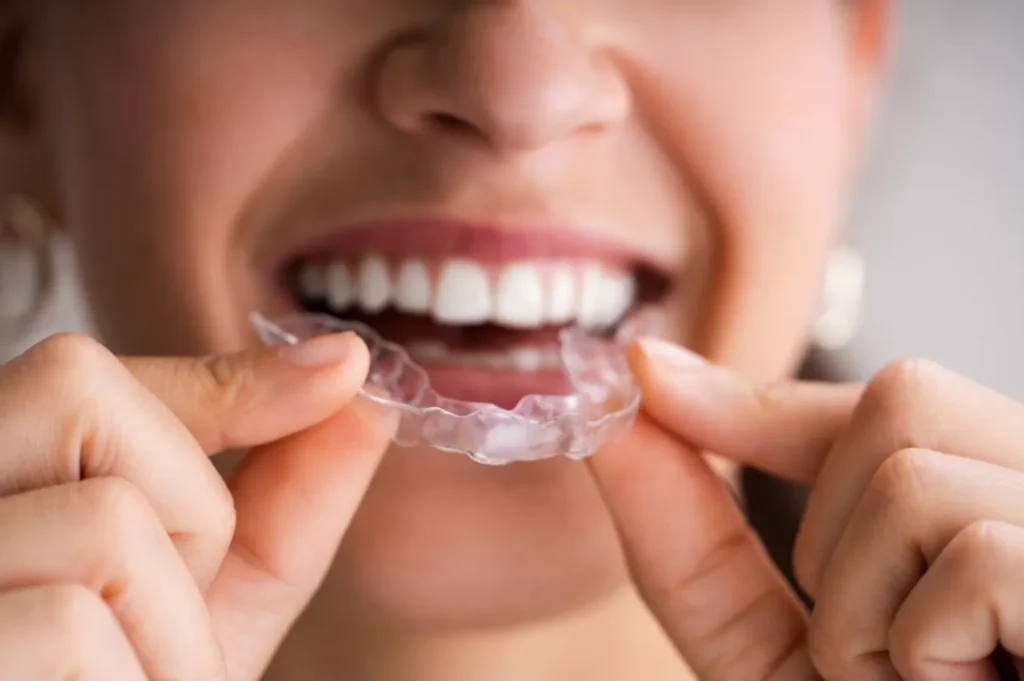
A night guard fits over the upper or lower teeth and creates a durable surface between the arches. When you clench or grind, the appliance takes much of the direct contact that would otherwise occur between the teeth.
The main purpose of a night guard is to protect the teeth from the effects of grinding and clenching. It may help with certain muscle-related symptoms, but it is not a guaranteed way to stop bruxism, cure headaches, or address every source of jaw discomfort. Ongoing headaches or jaw soreness should be evaluated separately so another problem is not overlooked.
Custom Night Guard or Store-Bought Guard?
Over-the-counter guards can be useful for short-term protection, but fit and material thickness vary. A poorly fitting appliance can feel bulky, loosen during sleep, or change the way your teeth contact each other.
A custom night guard is made from a record of your teeth and can be adjusted to fit your bite. That is particularly helpful when you have crowns, bridges, implants, veneers, or other dental work that should be protected from heavy grinding forces.
How Is a Custom Night Guard Made?
TRIOS 3D intraoral scanners are available at all nine Dental Design Studios locations and may be used to create a digital model of your teeth. The guard is fabricated from that record and then checked in the mouth so the fit and bite can be adjusted.
The 75th Ave Dental Studio also has 3D-printing capability used for selected night-guard workflows. The exact fabrication method is less important than receiving an appliance that fits securely, feels manageable to sleep in, and is appropriate for your bite.
Getting Used to Sleeping With a Night Guard
A new appliance can feel noticeable at first because your mouth is not used to having anything over the teeth during sleep. Most patients need a short adjustment period before the guard feels routine.
If the appliance causes persistent soreness, feels unusually tight, repeatedly falls out, or changes your bite in a way that does not settle after removal, contact the office. A custom guard can often be adjusted rather than abandoned.
Caring for Your Night Guard
Rinse and clean the guard as instructed, allow it to dry, and store it in a ventilated case away from heat. Inspect it for cracks, rough spots, thinning, or other wear, especially if you grind heavily or notice that the appliance feels different when you put it in.
Bring the appliance to periodic dental visits so the fit and condition can be checked. If you have significant new dental work or your bite changes, the guard may need adjustment or replacement. A guard that no longer fits correctly should not simply be forced over the teeth.
Frequently Asked Questions
Will a night guard stop me from grinding my teeth?
Can a night guard help jaw soreness?
Some patients with muscle fatigue from clenching may feel better with appropriate protection, but jaw pain has multiple causes. Persistent or significant symptoms should be evaluated rather than assuming a guard will solve them.
Can I use a sports mouth guard at night?
Sports guards are designed for impact protection, while night guards are designed for repeated grinding and clenching forces. They should not automatically be used interchangeably.
How long does a night guard last?
Longevity depends on the material, how strongly you grind, changes in your teeth, and how the appliance is cared for. It should be checked periodically and replaced when it becomes worn or no longer fits properly.
Do I need a new night guard after a crown or other dental work?
Maybe. New dental work can change the shape or contact of the teeth. Bring your existing guard so the dentist can determine whether it still fits or can be adjusted.
Custom Night Guards Near You
Dental Design Studios provides care at nine locations across the Greater Phoenix area: Apple Tree Dental Studio in Avondale, Arizona Family Dental in Chandler, 75th Ave Dental Studio in Glendale, Happy Valley Dental Studio in Phoenix, Hatcher Dental Studio in Phoenix, Smile Dental Studio in Phoenix, Thunderbird Dental Studio in Peoria, Dental Design Studio of Gilbert in Gilbert, and Scottsdale Dental Studio in Scottsdale.
If you are noticing worn edges, morning tooth sensitivity, or signs of clenching and grinding, a custom night guard may help protect your teeth. We can check your bite and existing dental work before deciding what type of guard makes sense.