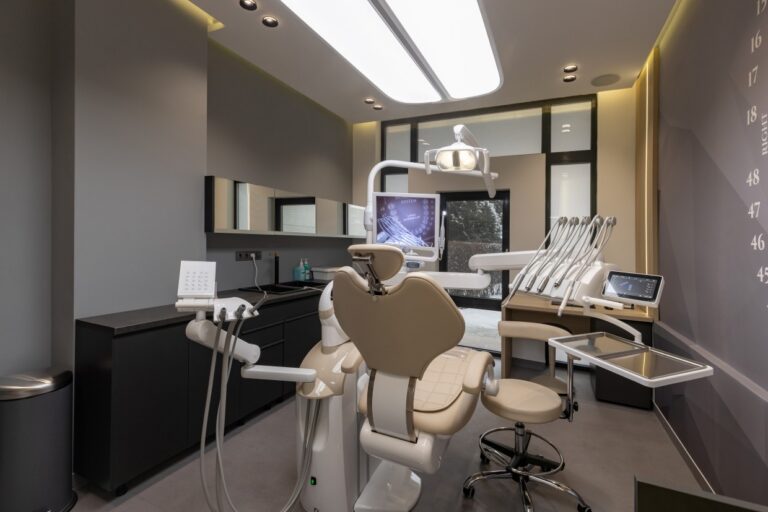
Advanced Dental Imaging for Clearer Treatment Planning
Some dental concerns require a deeper look than a traditional two-dimensional X-ray can provide. A 3D cone beam scan creates a detailed image of the mouth, jaw, and surrounding anatomy from multiple angles. This can help our team evaluate complex concerns more thoroughly before recommending treatment.
At Happy Valley Dental Studio, we use dental technology to make care more informed, visual, and personalized. Cone beam imaging can help us plan treatment for dental implants, wisdom teeth, oral surgery, root canal concerns, TMJ symptoms, and other advanced dental needs.
The goal is simple: better information, clearer explanations, and more thoughtful care.
What Is a 3D Cone Beam Dental Scan?
A 3D cone beam dental scan, also called CBCT imaging, is a specialized type of dental imaging that captures three-dimensional views of the teeth, bone, nerves, sinuses, and jaw structures. The scan creates a more complete picture than a standard dental X-ray.
Unlike traditional X-rays, which show flat images, cone beam scans allow our team to view the mouth from different angles. This can be especially helpful when planning treatment near important structures such as nerves, sinus cavities, impacted teeth, or areas with limited bone support.
Cone beam scans are not needed for every dental visit. Our team recommends them when the added detail can help improve diagnosis or treatment planning.
When Are 3D Dental Scans Used?
Cone beam scans may be used when we need a more detailed understanding of your oral anatomy. They can help guide treatment decisions and reduce guesswork in more complex cases.
3D cone beam dental scans may be used for:
- Dental implant planning
- All-on-4 implant planning
- Wisdom teeth evaluation
- Oral surgery planning
- Tooth extraction planning
- Root canal evaluation
- Jawbone evaluation
- Impacted tooth assessment
- TMJ evaluation
- Sinus and airway-related dental planning
- Full mouth reconstruction
- Evaluating dental infections or cysts
- Assessing bone loss from gum disease
- Planning complex restorative care
Our team will explain why a scan is recommended and how it may help with your treatment plan.
Benefits of 3D Cone Beam Imaging
Cone beam technology gives our team a clearer view of structures that are not always visible on traditional dental images. For patients, this can lead to better understanding and more confident treatment decisions.
Benefits of 3D cone beam dental scans may include:
- More detailed views of teeth, roots, and bone
- Improved dental implant planning
- Better understanding of impacted wisdom teeth
- More precise oral surgery planning
- Clearer evaluation of jawbone volume
- Helpful imaging for complex root canal concerns
- Better visualization of nerves and sinus areas
- More informed treatment recommendations
- Visual support for patient education
- Documentation for complex dental cases
At Happy Valley Dental Studio, we use this technology when it adds value to your care.
3D Cone Beam Scans for Dental Implants
Dental implants need strong, healthy bone support. Before implant treatment, a cone beam scan can help our team evaluate the height, width, and density of the jawbone where the implant may be placed.
The scan can also help identify important structures such as nerves and sinuses. This information is useful when planning single dental implants, implant-supported bridges, implant-supported dentures, or All-on-4 implants.
If bone loss is present, the scan may also help determine whether additional treatment, such as bone grafting or a different implant approach, may be needed.
3D Cone Beam Scans for Wisdom Teeth and Oral Surgery
Wisdom teeth can grow in at difficult angles, become trapped beneath the gums, or sit close to nerves and other important structures. A 3D cone beam scan can help our team evaluate the position of the wisdom teeth before extraction.
Cone beam imaging may also be helpful for surgical extractions, impacted teeth, dental infections, and treatment planning before oral surgery. By seeing the area in greater detail, our team can better explain what is happening and what the procedure may involve.
3D Imaging for Root Canal Concerns
Some root canal concerns are difficult to fully understand with standard X-rays alone. A cone beam scan may help show root shape, hidden canals, infection around the root, cracks, or changes in the surrounding bone.
If you have ongoing tooth pain, swelling, or a tooth that has already had root canal treatment, 3D imaging may help our team gather more information before recommending the next step.
Not every root canal case needs a cone beam scan, but it can be valuable when symptoms or anatomy are more complex.
3D Cone Beam Scans and Full Mouth Reconstruction
Full mouth reconstruction often involves several dental concerns at once, including missing teeth, damaged teeth, worn teeth, gum disease, bite problems, or failing dental work. A 3D cone beam scan can help create a more complete picture of the mouth before treatment begins.
This imaging may support planning for:
- Dental implants
- Tooth extractions
- Bone evaluation
- Dentures or implant-supported dentures
- Full arch implant treatment
- Bite-related concerns
- Complex restorative treatment
When planning larger treatment cases, better imaging can help create a more organized and predictable path forward.
What to Expect During a 3D Cone Beam Scan
A cone beam scan is quick, non-invasive, and does not require numbing. Our team will explain the process before the scan begins.
Positioning
You will be positioned near the scanner so it can capture the needed images. Our team will help you stay still and comfortable.
Image Capture
The scanner rotates around your head to capture detailed images of your teeth, jaw, and surrounding structures. The scan usually takes less than a minute.
Image Review
After the scan is complete, our team can review the images and use them to support diagnosis or treatment planning.
Treatment Discussion
If the scan reveals an issue or helps clarify a treatment recommendation, we will explain what we see in plain language and answer your questions.
Are Cone Beam Dental Scans Safe?
Cone beam dental scans use radiation, so they are only recommended when the information is needed for diagnosis or treatment planning. Our team considers your dental needs, medical history, and the purpose of the scan before recommending imaging.
The scan is designed to capture detailed information while focusing on the area needed for dental care. If you have questions or concerns about imaging, we are happy to discuss why the scan is being recommended and how it may help with your treatment.
How 3D Imaging Helps Patients Understand Their Care
Dental treatment can feel confusing when you cannot see what is happening below the surface. Cone beam imaging allows our team to explain certain concerns more visually, especially when planning implants, oral surgery, or complex restorative care.
For example, a 3D scan may help show:
- How much bone is available for an implant
- Where a wisdom tooth is positioned
- How close a tooth is to a nerve or sinus
- Why a tooth may need surgical removal
- Where infection may be affecting the bone
- Why a treatment plan needs multiple steps
At Happy Valley Dental Studio, we want patients to feel informed and involved in their care decisions.
A Supportive Approach to Advanced Dental Technology
Technology is only helpful when it improves care and communication. At Happy Valley Dental Studio, we use tools like 3D cone beam dental scans to better understand your oral health and explain treatment options clearly.
If you feel nervous about dental imaging, treatment planning, or complex dental care, our team will walk you through the process. We are known for helping anxious patients feel more comfortable through clear explanations, patience, and a judgment-free approach.
3D Cone Beam Dental Scans Near Norterra and Happy Valley
Happy Valley Dental Studio is located at:
1985 W Happy Valley Rd #115
Phoenix, AZ 85085
Our office is near Happy Valley Towne Center, Norterra Shops, Phoenix Deer Valley Airport, USAA Phoenix Corporate Campus, Dixie Mountain, and Victory Lane Sports Park. We serve patients from Norterra, Mountaingate, Stetson Hills, Happy Valley Estates, Stetson Valley, Alameda Estates, and nearby North Phoenix neighborhoods.
Schedule a Dental Visit in Phoenix, AZ
If you need advanced dental imaging for implants, oral surgery, root canal concerns, wisdom teeth, or complex treatment planning, Happy Valley Dental Studio can help. Our team uses 3D cone beam dental scans when detailed imaging can support better diagnosis and care.
Call 623-566-0150 today to in Phoenix, AZ.
Frequently Asked Questions
What Is a 3D Cone Beam Dental Scan?
A 3D cone beam dental scan is a type of dental imaging that creates detailed three-dimensional views of the teeth, roots, jawbone, nerves, sinuses, and surrounding oral structures.
Why Would I Need a Cone Beam Scan?
A cone beam scan may be recommended for dental implants, wisdom teeth, oral surgery, root canal concerns, TMJ evaluation, full mouth reconstruction, or complex treatment planning that requires more detail than a standard X-ray.
Does a 3D Dental Scan Hurt?
No. A cone beam scan is quick, non-invasive, and does not require numbing. You simply stay still while the scanner captures the needed images.
Are 3D Cone Beam Scans Used for Dental Implants?
Yes. Cone beam scans are commonly used to evaluate jawbone support, implant positioning, nerves, and sinus areas before dental implant treatment.
Where Can I Get a 3D Cone Beam Dental Scan in Phoenix, AZ?
Happy Valley Dental Studio uses 3D cone beam dental scans at 1985 W Happy Valley Rd #115 in Phoenix, AZ. Our office serves Norterra, Mountaingate, Stetson Hills, Happy Valley Estates, Stetson Valley, Alameda Estates, and surrounding North Phoenix communities.