What Is a Dental Implant?
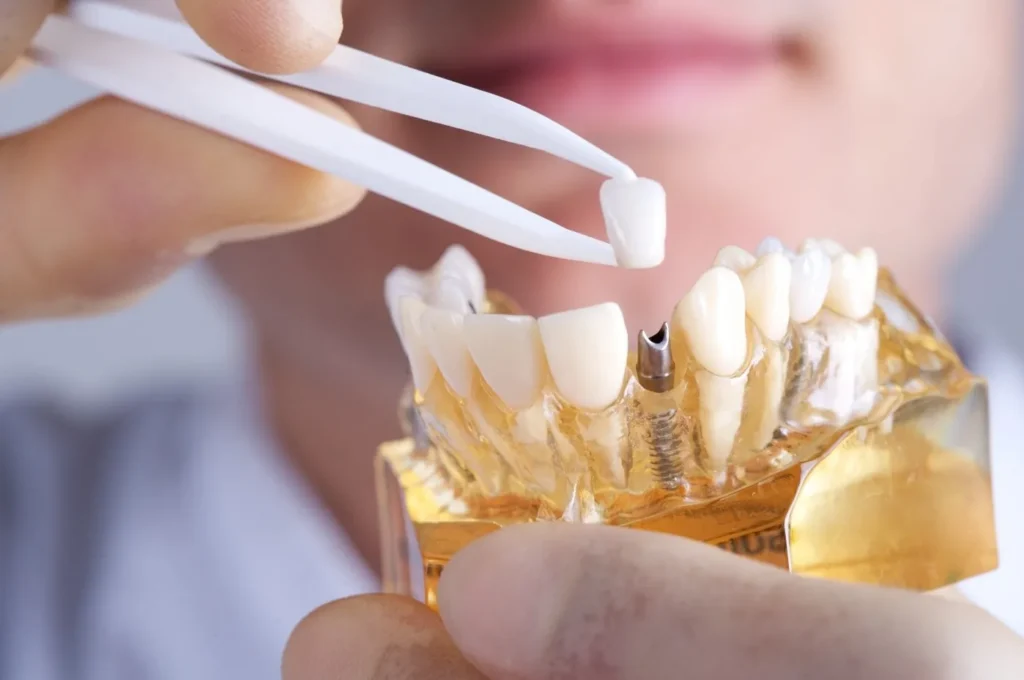
A dental implant is a small post placed in the jaw to act as a foundation for a replacement tooth or implant-supported restoration. After the implant has healed and become stable, a crown or other replacement can be attached above the gumline.
The implant itself replaces the supporting role of the missing root, while the visible replacement is designed separately to restore the tooth you see and use. The finished tooth should fit comfortably with your bite and work naturally alongside your remaining teeth.
Who May Be a Candidate for Implants?
Implant treatment depends on the health of the gums and bone, the condition of the treatment area, medical history, smoking or tobacco use, oral hygiene, and the forces created by your bite. Some patients are ready for implant placement without much additional treatment, while others need periodontal care, healing, or another preparatory step first.
Being told that you have limited bone does not automatically rule out every implant option, but it can change what is required. Your dentist will review the area and explain whether implant treatment is realistic before you commit to the process.
What Is the Implant Treatment Process?
Planning begins with an examination and dental imaging. TRIOS 3D intraoral scanners are available at all nine Dental Design Studios offices for detailed digital records, and CBCT imaging is available at selected locations when three-dimensional evaluation of the jaw is needed.
The implant is placed in the planned position and then given time to heal. Depending on the case, a temporary tooth may be used during that period. Once the implant has become sufficiently stable, the final replacement is completed and adjusted to fit the bite.
Can an Implant Be Placed the Same Day a Tooth Is Removed?
Sometimes. Dental Design Studios includes implants among its same-day treatment capabilities for appropriate patients. When the socket, bone support, infection status, and implant stability allow it, placement may occur on the day of extraction.
That does not eliminate the healing phase. The implant still needs time to integrate and become stable in the jaw before it carries the final restoration. At 75th Ave Dental Studio, 3D printing is also used for selected immediate single-tooth implant temporization.
Dental Implant, Bridge, or Removable Replacement?
An implant supports its own replacement tooth, while a traditional bridge uses neighboring teeth as anchors. A removable partial denture can replace one or several teeth without implant surgery, but it is taken out for cleaning.
The better option depends on the health of adjacent teeth, bone support, the number and location of missing teeth, treatment time, maintenance, and personal preference. A consultation should compare those differences rather than treating implants as the automatic answer for every missing tooth.
Implants for Several or All Missing Teeth
Dental implants can support more than a single crown. Snap-On Dentures attach to implants for greater stability while remaining removable by the patient. All-on-X uses multiple implants to support a fixed full-arch restoration that stays in the mouth.
Those treatments solve different problems and involve different maintenance. If you are missing many teeth, we can compare the amount of surgery, removability, cleaning, and long-term care involved in each option. The number of missing teeth alone does not determine which implant-supported solution makes the most sense.
Caring for Dental Implants
Implants cannot develop cavities, but the tissues around them still require daily care. Plaque accumulation and inflammation can affect the gums and bone that support an implant, so brushing, cleaning around the restoration, and regular professional maintenance remain important.
Your bite is also monitored because heavy clenching or grinding can place stress on the implant and restoration. If you notice looseness, bleeding, swelling, discomfort, or a change in the way the implant feels when you chew, have it evaluated.
Frequently Asked Questions
Are dental implants permanent?
Implants are designed as long-term tooth replacements, but no dental treatment should be promised for life. The implant, replacement tooth, gums and bone around it, oral hygiene, and bite all need ongoing care.
Can I get a tooth and implant on the same day?
Do dental implants get cavities?
How long does an implant take to heal?
Can implants support dentures?
What if I do not have enough bone for a dental implant?
An implant evaluation includes a look at the available bone and the position of nearby structures. If the site does not currently support the planned implant, the dentist can explain whether additional treatment, a specialist referral, or another tooth-replacement option should be considered.
Dental Implant Consultations Near You
Dental Design Studios provides care at nine locations across the Greater Phoenix area: Apple Tree Dental Studio in Avondale, Arizona Family Dental in Chandler, 75th Ave Dental Studio in Glendale, Happy Valley Dental Studio in Phoenix, Hatcher Dental Studio in Phoenix, Smile Dental Studio in Phoenix, Thunderbird Dental Studio in Peoria, Dental Design Studio of Gilbert in Gilbert, and Scottsdale Dental Studio in Scottsdale.
If you are missing a tooth or know one may need to be removed, it can help to discuss implant options before the space is left untreated. We can evaluate the site, explain the timeline, and compare implants with bridges or removable options without assuming one solution is right for everyone.