
How Does a Traditional Dental Bridge Work?
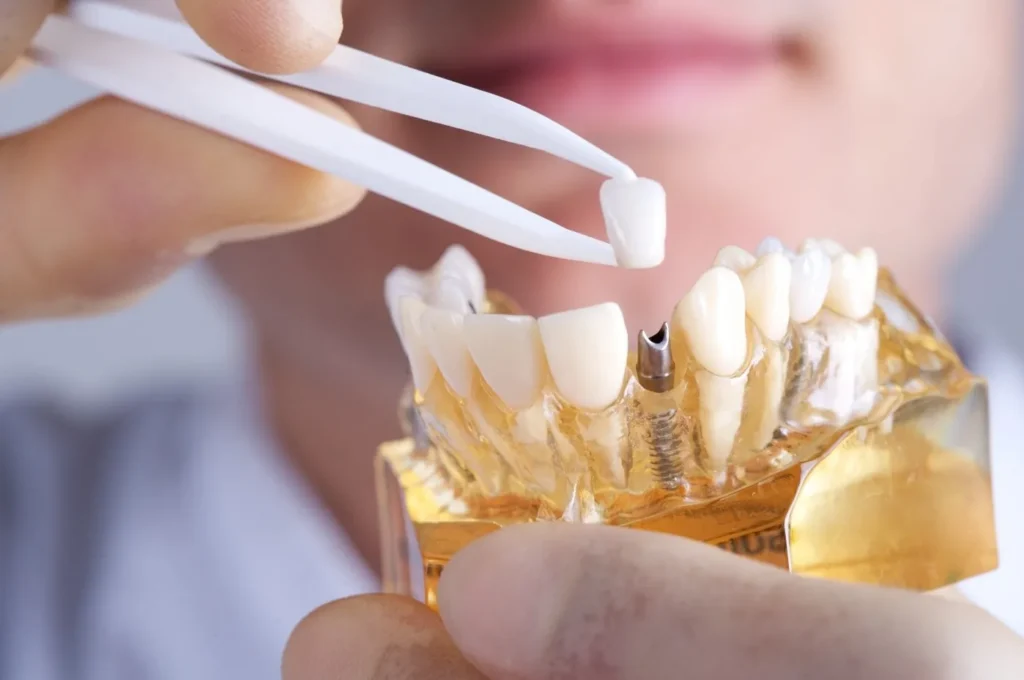
A traditional bridge uses the teeth on either side of a missing-tooth space as anchors. Those supporting teeth receive crowns, and a replacement tooth is connected between them to fill the gap.
Because the bridge is fixed in place, you brush it as part of your normal routine. Cleaning underneath the replacement tooth requires a floss threader, interdental brush, water flosser, or another method that can reach below the bridge where ordinary floss cannot pass through from the top.
When Is a Bridge a Good Option?
A bridge may make sense when one or more teeth are missing and the neighboring teeth can provide dependable support. It can be particularly reasonable when those neighboring teeth already need crowns for their own restorative reasons.
If the teeth beside the space are completely healthy, a dental implant may be worth comparing because an implant can replace the missing tooth without using those neighboring teeth as anchors. The right choice depends on the entire area, not just the empty space.
Dental Bridge or Dental Implant?
A bridge relies on neighboring teeth for support, while a dental implant is placed in the jaw and supports its own replacement tooth. Both are fixed solutions, but the treatment process and maintenance are different.
An implant involves surgery and a healing period, while a traditional bridge usually involves preparing the supporting teeth. Bone support, gum health, medical history, the condition of adjacent teeth, and your preferences all matter. Neither option should be presented as universally better.
What Happens During Bridge Treatment?
The supporting teeth are evaluated and prepared to receive the crowns that will hold the bridge. A digital scan or impression records the area and bite so the restoration can be designed to fit comfortably with the surrounding teeth.
A temporary restoration may be used while the final bridge is being made. Once the bridge is ready, the fit, contacts, and bite are checked before it is cemented. You should be able to chew comfortably without the bridge feeling unusually high or difficult to clean.
Can I Get a Bridge After a Tooth Extraction?
Yes, but timing depends on the area and the treatment plan. Gum and bone tissues change as an extraction site heals, and those changes can affect the shape of a final bridge.
If a tooth is known to be unsalvageable, it is useful to discuss replacement before the extraction when possible. That allows the dentist to plan the space, temporary needs, healing, and final restoration together rather than treating each step as unrelated.
How Long Does a Dental Bridge Last?
A bridge can function for many years, but its longevity depends heavily on the health of the supporting teeth and the way it is cleaned. Decay can still develop at the crown margins, and gum inflammation can occur if plaque collects underneath the replacement tooth.
Regular exams allow us to check the bridge, supporting teeth, bite, and tissues around it. If the bridge becomes loose, develops a rough edge, traps food differently, or causes new discomfort, have it evaluated before the problem becomes larger.
Frequently Asked Questions
Do you have to grind down healthy teeth for a bridge?
Traditional bridges require preparation of the supporting teeth so they can receive crowns. Whether that tradeoff makes sense depends partly on the condition of those teeth and whether an implant is another reasonable option.
Can I floss under a bridge?
Yes, but the cleaning method is different because ordinary floss cannot pass down through the connected replacement tooth. Floss threaders, interdental brushes, or other tools can help clean underneath.
Can a bridge get a cavity?
The artificial replacement tooth cannot decay, but the natural supporting teeth can develop cavities around the crown margins.
What happens if a bridge comes loose?
Save any piece that comes out and contact the office. Do not use household glue. The dentist needs to determine whether the bridge can be recemented or whether the supporting teeth have changed.
Explore Dental Bridges Near You
Dental Design Studios provides care at nine locations across the Greater Phoenix area: Apple Tree Dental Studio in Avondale, Arizona Family Dental in Chandler, 75th Ave Dental Studio in Glendale, Happy Valley Dental Studio in Phoenix, Hatcher Dental Studio in Phoenix, Smile Dental Studio in Phoenix, Thunderbird Dental Studio in Peoria, Dental Design Studio of Gilbert in Gilbert, and Scottsdale Dental Studio in Scottsdale.
If you are missing a tooth and want to compare a bridge with an implant or removable option, we can evaluate the space and the neighboring teeth. The best choice depends on what will function well and be realistic for your mouth over time.