
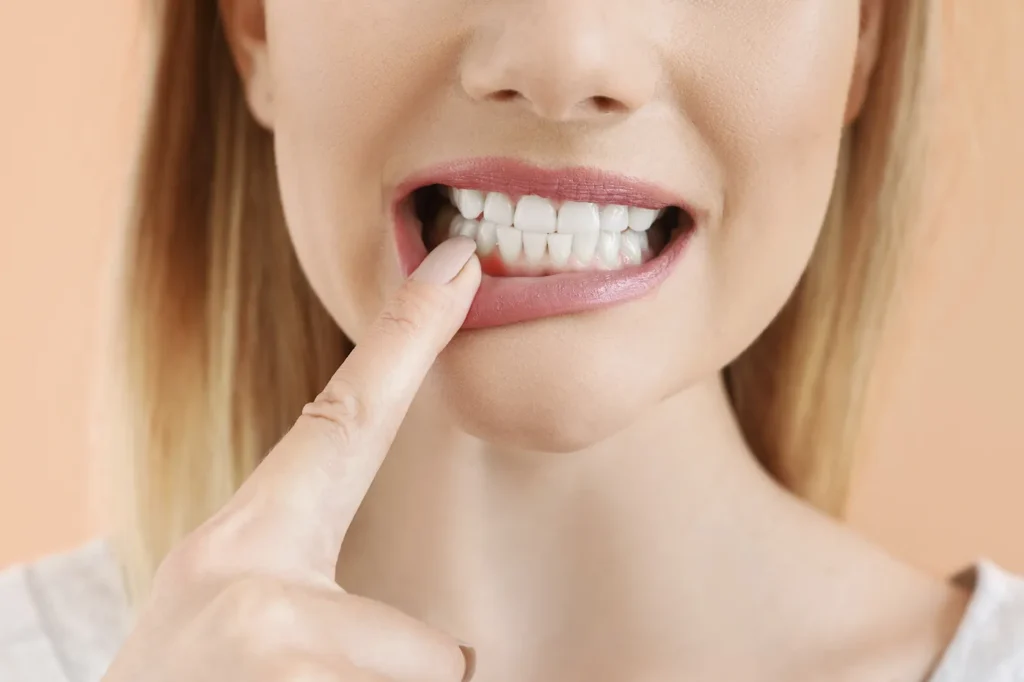

What Is Gum Disease?
Gum disease begins when plaque and bacteria irritate the tissues around the teeth. In its earliest stage, called gingivitis, the gums may become red, swollen, or prone to bleeding. At this stage, the supporting bone has not been lost and the inflammation can often be reversed with improved home care and professional cleaning.
Periodontitis is more advanced. The inflammation extends deeper around the teeth, periodontal pockets form, and the bone and tissues that support the teeth can begin to break down. Once that supporting tissue has been lost, treatment focuses on controlling the disease and preventing further damage.
What Are the Signs of Gum Disease?
Common signs include bleeding when brushing or flossing, swollen or tender gums, persistent bad breath, gum recession, spaces that seem to be opening between teeth, or teeth that feel loose. Some patients notice almost no symptoms, especially early on.
That is why gum measurements and dental X-rays can be important. They help the dentist evaluate what is happening below the gumline and determine whether the issue is simple inflammation or a deeper periodontal problem.
How Is Gum Disease Diagnosed?
Your dentist or hygienist examines the gums, measures the spaces around the teeth, checks for bleeding and inflammation, and looks for recession or tooth mobility. Dental X-rays may be used to evaluate the supporting bone and identify patterns of bone loss that are not visible from the surface.
The diagnosis matters because a routine cleaning is designed for generally healthy gums. If periodontal pockets and buildup extend below the gumline, a standard cleaning may not reach the areas that need treatment. The measurements also create a baseline that can be compared with future visits.
When Is a Deep Cleaning Needed?
Scaling and root planing, often called a deep cleaning, is used when periodontal disease has created deposits and inflammation below the gumline. The treatment removes plaque and hardened buildup from the root surfaces and helps create a cleaner environment for the gums to heal.
Treatment may be divided into sections of the mouth depending on how much care is needed. Local anesthetic can be used for comfort. Afterward, the gums are reevaluated to see how the tissues have responded and what maintenance schedule makes sense.
Do I Need Antibiotics for Gum Disease?
Not every patient with gum disease needs antibiotics. The main treatment is mechanical removal of plaque and calculus from areas that cannot be cleaned adequately at home. Medication may be considered in selected situations, but it is not a substitute for cleaning the root surfaces and controlling plaque.
Your dentist will decide whether any medication adds value based on the severity and pattern of the disease, your medical history, and how the tissues respond to treatment. If antibiotics are not likely to improve the outcome, they should not be added simply because gum disease is present.
What Happens After Periodontal Treatment?
Periodontitis usually requires ongoing management, not a one-time treatment. After the active treatment phase, more frequent periodontal maintenance may be recommended so deeper areas around the teeth can be monitored and cleaned before inflammation builds again.
Home care matters just as much. Brushing along the gumline, cleaning between the teeth, and following the recommended visit schedule are all part of keeping the disease stable. If pocket depths, bleeding, or tooth mobility change, the maintenance plan may need to change with them.
Gum Disease and Receding Gums
Gum disease can contribute to gum recession, which may expose more of the tooth or root and lead to sensitivity. Recession can also have causes unrelated to periodontal disease, including brushing habits, tooth position, and naturally thin gum tissue.
If your gums have receded, we can evaluate what may be causing the change and explain which treatment options make sense. When surgical gum grafting is the appropriate next step, Dental Design Studios refers that care to a periodontal specialist.
Frequently Asked Questions
Can gingivitis go away?
Yes. Gingivitis can often be reversed when plaque and inflammation are controlled before the supporting bone is affected.
Can periodontitis be cured?
Periodontitis is generally considered a condition that needs long-term management. Treatment aims to control infection and inflammation, stabilize the tissues, and reduce the risk of further bone and tooth loss.
Why do my gums bleed when I brush?
Bleeding can be a sign of inflammation, although brushing technique and other factors can also contribute. Persistent bleeding deserves an evaluation instead of being accepted as normal.
Is a deep cleaning the same as a regular cleaning?
Does Dental Design Studios perform gum grafting?
No. Gum grafting is referred to a periodontal specialist when surgical root coverage or additional gum tissue is needed.
Gum Disease Care Near You
Dental Design Studios provides care at nine locations across the Greater Phoenix area: Apple Tree Dental Studio in Avondale, Arizona Family Dental in Chandler, 75th Ave Dental Studio in Glendale, Happy Valley Dental Studio in Phoenix, Hatcher Dental Studio in Phoenix, Smile Dental Studio in Phoenix, Thunderbird Dental Studio in Peoria, Dental Design Studio of Gilbert in Gilbert, and Scottsdale Dental Studio in Scottsdale.
If your gums bleed often, stay swollen, or you have persistent bad breath or loose teeth, schedule a periodontal evaluation. Finding the cause early can make the treatment plan simpler and help protect the support around your teeth.