
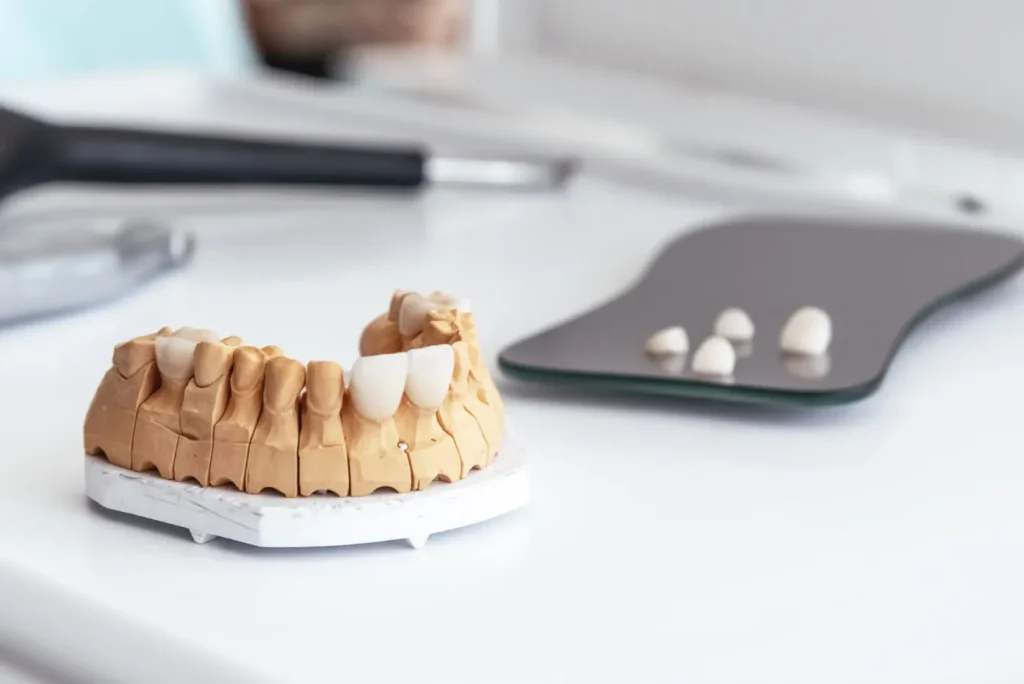

When Does a Tooth Need a Crown?
A crown may be recommended after a large fracture, extensive decay, repeated filling failure, root canal treatment, or significant wear. Crowns can also restore teeth that are badly misshapen or discolored when the tooth needs structural coverage as well as a cosmetic change.
The key question is whether the remaining tooth can support a more limited restoration. If a filling or inlay can provide a dependable repair, there is no benefit to removing more healthy tooth structure than necessary.
Crown, Filling, or Inlay and Onlay?
A filling repairs a smaller area of lost tooth structure. An inlay or onlay provides custom coverage when the damage is more extensive but the tooth does not need to be fully covered. A crown surrounds most or all of the visible portion of the tooth above the gumline.
The choice is based on the size and location of the defect, the strength of the remaining walls and cusps, and the forces the tooth must handle. A larger restoration is not automatically better simply because it covers more.
What Happens During Crown Treatment?
The tooth is shaped to create room for the crown while preserving the healthy structure that can remain. A digital scan or impression records the prepared tooth, neighboring teeth, and bite so the restoration can be designed accurately.
A temporary crown may be placed while the final restoration is being made. At the delivery visit, the dentist checks the fit, contacts, appearance, and bite before the crown is cemented. If the tooth feels high after the numbness wears off, let the office know so the bite can be adjusted.
Why Are Crowns Common After Root Canals?
Root canal treatment removes diseased tissue from inside the tooth, but it does not rebuild tooth structure that was already lost to decay, fracture, or previous fillings. Many back teeth need additional coverage afterward because they must withstand strong chewing forces.
A crown can protect the remaining tooth from splitting or breaking. Not every root-canal-treated tooth needs the same restoration, so the final plan depends on which tooth was treated and how much sound structure remains.
Crowns for Cracked or Broken Teeth
A crown may help when a crack or fracture weakens the outer structure but the tooth is still restorable. The dentist needs to determine how deep the damage extends before deciding whether coverage is enough.
Some cracks extend below the gumline or into the root and cannot be repaired reliably with a crown. If the nerve is damaged, root canal treatment may also be needed. If the tooth cannot be saved, extraction and replacement options can be discussed.
How Long Does a Crown Last?
A crown can last for many years, but it is not permanent. Decay can develop around the margin, the ceramic or other material can chip, the supporting tooth can fracture, and the bite can change over time.
Daily brushing and cleaning between the teeth are important because the crown depends on the health of the tooth and gum around it. If you grind or clench, a night guard may help protect the crown along with the rest of your teeth.
Frequently Asked Questions
Will a crown look like a natural tooth?
The restoration is designed to match the surrounding teeth in shape and color when appearance is important. Material selection also depends on the location and function of the tooth.
Does getting a crown hurt?
Can a crown fall off?
Yes. Cement can fail, the tooth underneath can change, or the restoration can be damaged. Save the crown if possible and contact the office rather than using household glue.
Can a crowned tooth get a cavity?
Yes. The crown itself does not decay, but the natural tooth can develop decay around the edges where the crown meets the tooth.
Do I always need a crown after a large filling breaks?
Not always. The dentist will evaluate how much healthy structure remains and whether a new filling, onlay, crown, or another treatment provides the best support.
Dental Crowns Near You
Dental Design Studios provides care at nine locations across the Greater Phoenix area: Apple Tree Dental Studio in Avondale, Arizona Family Dental in Chandler, 75th Ave Dental Studio in Glendale, Happy Valley Dental Studio in Phoenix, Hatcher Dental Studio in Phoenix, Smile Dental Studio in Phoenix, Thunderbird Dental Studio in Peoria, Dental Design Studio of Gilbert in Gilbert, and Scottsdale Dental Studio in Scottsdale.
If a tooth is cracked, heavily filled, worn, or recently treated with a root canal, an examination can show whether a crown is the right amount of protection. We will explain what healthy tooth structure remains and why a crown, filling, or onlay fits the situation.