Dentures in Gilbert, AZ

With 9 Convenient Locations in the Phoenix Area

Tooth Replacement for a More Complete Smile

Missing teeth can affect the way you eat, speak, smile, and feel throughout the day. Whether you are missing several teeth or a full arch of teeth, dentures may provide a practical way to restore appearance and function.

At Dental Design Studio in Gilbert, AZ, we offer denture options for patients who need to replace missing teeth, improve chewing ability, or move forward after tooth loss. Dentures can be designed to replace all teeth in an upper or lower arch, or they may replace several missing teeth while working around remaining natural teeth.

Our office is located on E Guadalupe Road near Dana Park Village Square, Gilbert Road, Freestone District Park, Gilbert High School, and Downtown Gilbert. We serve patients from Val Vista Lakes, The Islands, Stonecreek, Freestone Station, Morrison Ranch, and surrounding East Valley communities.

Call 480-621-5535 to schedule a denture consultation in Gilbert, AZ.

Dental Design Studios logo for a dental office serving Greater Phoenix, AZ

Need To Schedule OR Have A Question?

Services Form

What Are Dentures?

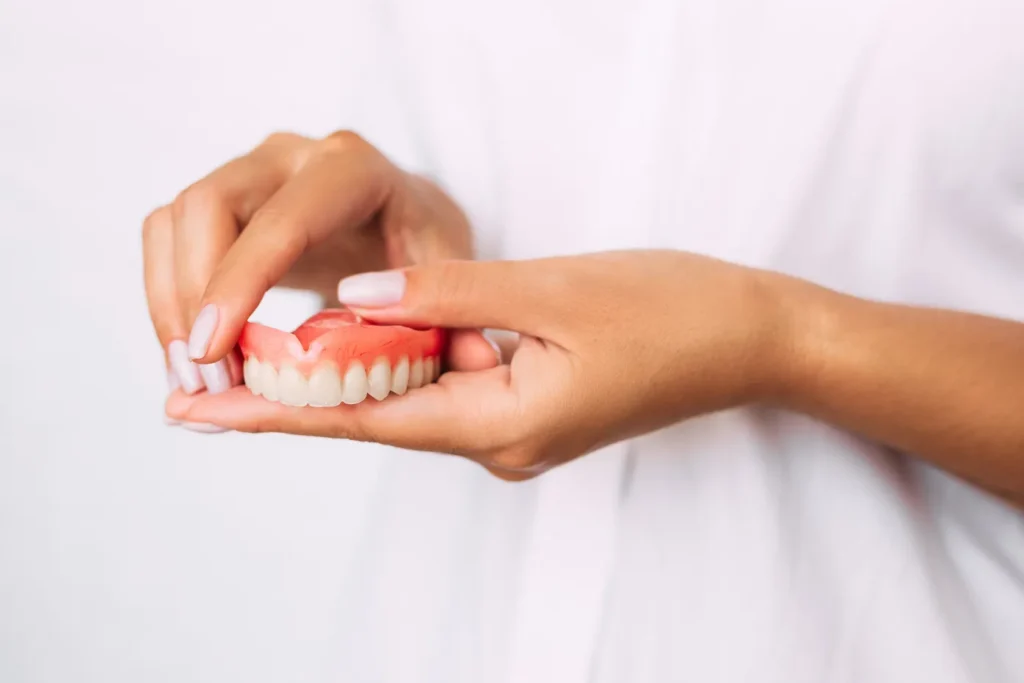
Dentures are removable dental appliances used to replace missing teeth and surrounding gum tissue. They are custom-made to fit your mouth and help restore the appearance of your smile.

Dentures may be used when a patient has lost teeth due to decay, gum disease, injury, infection, or long-term dental damage. They can help support facial appearance, make eating easier, and improve speech when missing teeth have affected pronunciation.

The right denture option depends on how many teeth are missing, whether any natural teeth remain, the health of your gums and bone, your bite, and your goals for comfort and stability.

Why Replacing Missing Teeth Matters

Tooth loss can affect more than the open spaces in your smile. Missing teeth can change how your mouth functions and how the surrounding structures are supported.

Chewing can become harder

Missing teeth can make it difficult to chew certain foods. Patients may avoid meats, vegetables, nuts, or other foods that require stronger biting and grinding.

Speech can change

Teeth help shape certain sounds. When teeth are missing, some patients notice changes in pronunciation, especially with words that require tongue and tooth contact.

Facial support can decrease

Teeth and bone help support the lips and cheeks. When several teeth are missing, the lower face may begin to look sunken or less supported over time.

Remaining teeth may shift

If some natural teeth remain, they may drift toward open spaces. This can affect bite alignment and make future treatment more complicated.

Confidence can be affected

Many patients with missing teeth feel self-conscious when speaking, smiling, eating, or being photographed. Dentures can help restore a more complete appearance.

A First Visit Focused on Your Replacement Options

Your denture consultation begins with a full evaluation of your teeth, gums, bite, and oral health history. Our team will ask about your current concerns, whether you have worn dentures before, what foods are difficult to eat, and what you want to improve.

Digital images may be recommended to evaluate remaining teeth, bone support, gum health, and any areas of infection or damage. If you still have natural teeth, we will determine whether they can be saved or whether extractions may be needed before dentures are made.

After the exam, we explain your options clearly. You will understand whether full dentures, partial dentures, implant-supported dentures, or another tooth replacement option may be right for you.

Types of Dentures

Different denture options are available depending on how many teeth are missing and what kind of support is available in the mouth.

Full dentures

Full dentures are used when all teeth in the upper arch, lower arch, or both arches need to be replaced. They rest on the gums and are shaped to restore the appearance of teeth and gum tissue.

A full denture may be recommended when remaining teeth cannot be saved or when a patient has already lost all teeth in an arch.

Partial dentures

Partial dentures are used when some natural teeth remain. They fill in the spaces left by missing teeth and often attach to remaining teeth for support.

A partial denture can help improve chewing, reduce visible gaps, and limit shifting of the remaining teeth.

Immediate dentures

Immediate dentures may be placed after tooth extractions so the patient does not go without teeth during the initial healing period. These dentures often need adjustments as the gums and bone change after extractions.

Because the mouth changes during healing, a final denture or reline may be needed later for a better long-term fit.

Implant-supported dentures

Implant-supported dentures attach to dental implants for added stability. This option may be helpful for patients who want more support than traditional removable dentures can provide.

Implant-supported dentures depend on bone health, gum health, medical history, and the number of implants needed. During your consultation, we can explain whether this option may be appropriate.

Full Dentures for Complete Tooth Loss

Full dentures replace all teeth in an upper or lower arch. They are designed to restore the look of a full smile and improve the ability to chew and speak compared with having no teeth.

Upper dentures often have more natural suction because they cover the roof of the mouth. Lower dentures can be more challenging for some patients because the tongue, cheeks, and jaw movement can affect stability.

If you are considering full dentures, our team will explain what to expect, how the appliance should fit, and how your mouth may adjust over time. Dentures can make a meaningful difference, but they also require adaptation and ongoing care.

Partial Dentures for Several Missing Teeth

Partial dentures may be recommended when a patient is missing several teeth but still has healthy natural teeth remaining. A partial denture fills the gaps and helps maintain better function across the mouth.

Partials can be especially useful when missing teeth are located in different areas. They may help distribute chewing forces more evenly and reduce the risk of nearby teeth drifting into open spaces.

Before recommending a partial denture, we evaluate the remaining teeth and gums to make sure they can support the appliance. If any teeth need treatment first, we will explain how that fits into the larger plan.

Dentures After Tooth Extractions

Some patients need dentures after several teeth are removed. This may happen because of severe decay, advanced gum disease, infection, broken teeth, or teeth that can no longer support restorations.

If extractions are needed, we will explain which teeth cannot be saved and what the denture timeline may look like. Some patients may be candidates for immediate dentures, while others may need healing time before the final denture is made.

The mouth changes after extractions as the gums heal and the bone reshapes. This is why adjustments, relines, or a final denture may be needed after the initial healing period.

Dentures vs. Dental Implants

Dentures and dental implants are both used to replace missing teeth, but they work differently. Traditional dentures are removable appliances that rest on the gums. Dental implants are placed in the jawbone and can support crowns, bridges, or implant-supported dentures.

Dentures may be a good option for patients who want a removable tooth replacement option, need to replace many teeth, or are not ready for implant treatment. Dental implants may be a better fit for patients who want added stability and have enough bone support for implant placement.

Some patients choose a combination of both through implant-supported dentures. At Dental Design Studio, we help you compare your options based on health, comfort, timeline, maintenance, and budget.

Adjusting to New Dentures

New dentures take time to get used to. At first, the appliance may feel bulky or unfamiliar. Speaking and eating may require practice as your tongue, cheeks, and muscles learn how to work with the denture.

Soft foods are often easier during the adjustment period. Cutting food into smaller pieces and chewing evenly on both sides can help improve stability. Reading aloud may help with speech adjustments.

It is normal to need follow-up visits for adjustments, especially if sore spots develop. Dentures should not cause ongoing pain. If something feels uncomfortable, call our office so we can evaluate the fit.

Caring for Dentures

Dentures need daily care to stay clean, fresh, and functional. They should be removed and cleaned as instructed by our team. Plaque, food particles, and stains can collect on the appliance just like they do on natural teeth.

Dentures should also be handled carefully because they can break if dropped. When cleaning them, use a safe surface and avoid hot water, which may warp the material.

Even if you no longer have natural teeth, routine dental visits are still important. We check the fit of the denture, evaluate the gums and oral tissues, and look for irritation, sores, or changes that may affect comfort.

When Dentures Need Adjustment or Replacement

Dentures do not last forever. Over time, the shape of the mouth changes, especially after tooth loss. A denture that once fit well may begin to feel loose, rub the gums, affect speech, or make chewing harder.

You may need an adjustment, reline, repair, or replacement if your denture feels loose, causes sore spots, clicks when speaking, shifts while eating, looks worn, or no longer supports your facial appearance well.

Do not try to adjust dentures at home. Small changes can affect the fit and may damage the appliance. Our team can evaluate the denture and recommend the right next step.

Dentures and Gum Health

Healthy gums and oral tissues are important for denture comfort. If the gums are irritated, inflamed, or affected by infection, wearing dentures can become uncomfortable.

Patients with partial dentures also need to protect their remaining natural teeth. These teeth help support the appliance and must stay healthy for the denture to function properly.

Routine exams allow us to check the gums, remaining teeth, bite, and denture fit. If we notice irritation or changes in the tissue, we can recommend adjustments or treatment before the problem becomes more difficult.

Dentures and Dental Anxiety

Tooth loss and denture treatment can feel emotional. Patients may feel embarrassed about missing teeth, nervous about extractions, or unsure whether dentures will look natural.

At Dental Design Studio, we explain each step before treatment begins. You will understand what type of denture is being recommended, what the process may involve, and what to expect as you adjust.

If dental anxiety has kept you from asking about dentures, let us know. We can start with a conversation, evaluate your options, and help you decide what feels manageable.

Membership Options for Ongoing Dental Care

Dental Design Studio offers membership options for patients who want a clearer way to manage dental care without relying on traditional insurance. Preventive visits remain important for patients with dentures, especially for monitoring gum health, oral tissues, remaining teeth, and appliance fit.

Membership options may include preventive care, unlimited emergency exams, and different levels based on routine care, gum health, or dental implant maintenance. Our team can review available options and help you understand what may fit your needs.

Dentures Near Dana Park and Downtown Gilbert

Dental Design Studio is located at:

2323 E Guadalupe Rd STE 101
Gilbert, AZ 85234
Phone: 480-621-5535

Our office is near Dana Park Village Square, Gilbert Road, Freestone District Park, Southeast Regional Library, Gilbert High School, and Gilbert Town Hall & Municipal Center.

We welcome patients from Val Vista Lakes, The Islands, Dana Park, Stonecreek, Freestone Station, Morrison Ranch, Downtown Gilbert, and nearby East Valley communities.

Schedule a Denture Consultation in Gilbert, AZ

If you are missing teeth, struggling with an older denture, or planning for tooth extractions, Dental Design Studio can help you understand your replacement options.

Call 480-621-5535 to schedule a denture consultation in Gilbert, AZ.

Frequently Asked Questions About Dentures

What are dentures?

Dentures are removable dental appliances used to replace missing teeth and surrounding gum tissue. They can replace all teeth in an arch or several missing teeth while working around remaining natural teeth.

What is the difference between full and partial dentures?

Full dentures replace all teeth in the upper arch, lower arch, or both. Partial dentures replace several missing teeth when some healthy natural teeth remain.

How long does it take to adjust to new dentures?

Adjustment time varies by patient. It may take several weeks to get used to speaking, chewing, and wearing the appliance comfortably. Follow-up adjustments can help improve fit.

Do dentures need to be replaced?

Yes. Dentures may need adjustment, relining, repair, or replacement as the mouth changes over time. A loose or uncomfortable denture should be evaluated.

Do I still need dental visits if I have full dentures?

Yes. Routine visits are still important to check the gums, oral tissues, denture fit, and signs of irritation or other concerns.

Testimonials

Reviews

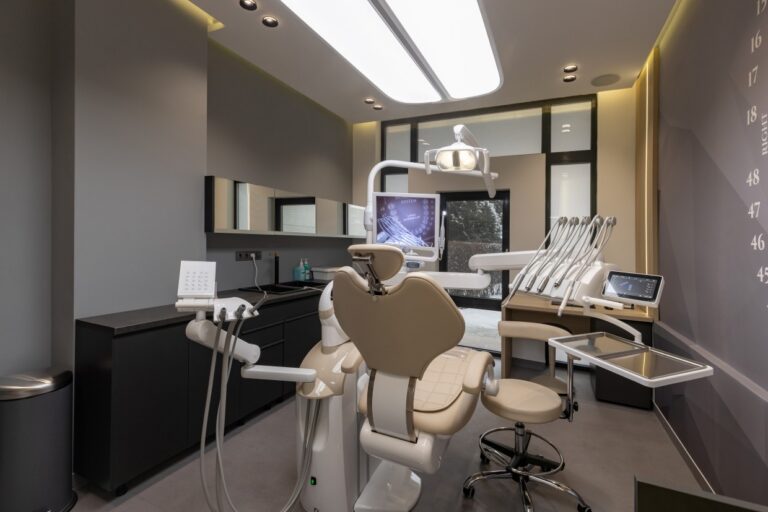
Modern dental operatory with patient chair, mounted screen, overhead lighting, and dark cabinetry
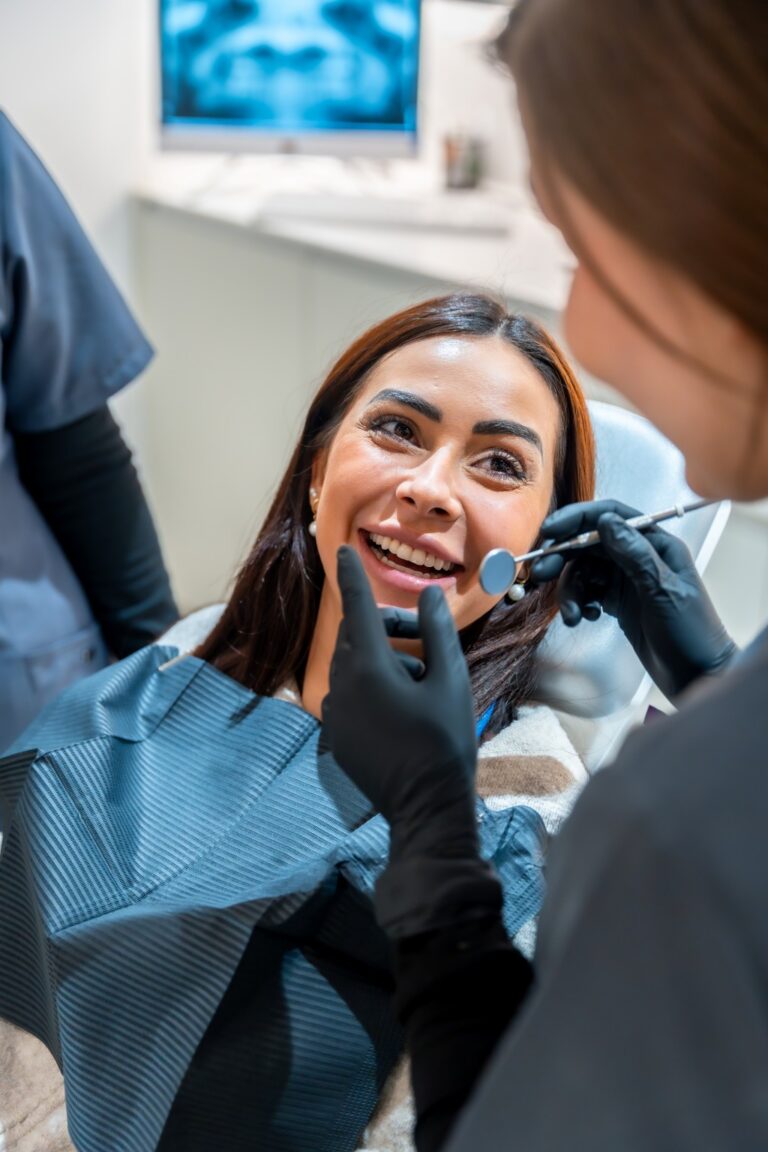
Smiling patient in a dental chair during a consultation or treatment visit with clinician nearby