What Is TMJ?
TMJ stands for temporomandibular joint. These joints connect the lower jaw to the skull and allow you to open, close, chew, speak, yawn, and move your jaw side to side.
When people say they have “TMJ,” they are often referring to TMJ disorder or jaw joint dysfunction. This can happen when the joint, muscles, bite, or surrounding structures are not working comfortably together.
TMJ symptoms can be mild and temporary, or they can become more persistent. Some patients only notice occasional clicking. Others experience pain, limited jaw movement, headaches, facial soreness, or tooth damage from grinding and clenching.
Signs You May Have a TMJ Problem
TMJ symptoms can show up in different ways. Some patients feel discomfort directly in the jaw joint, while others notice symptoms in the teeth, face, head, neck, or ears.
Jaw pain or soreness
Pain may happen on one side or both sides of the jaw. It may feel worse when chewing, yawning, talking, or waking up in the morning.
Clicking or popping
Some patients hear or feel clicking, popping, or shifting when opening and closing the mouth. Occasional clicking without pain may not require treatment, but painful clicking should be evaluated.
Headaches or facial tension
Jaw muscle tension can contribute to headaches, temple pain, facial soreness, or a tight feeling around the cheeks and jaw.
Teeth grinding or clenching
Grinding and clenching can place heavy pressure on the teeth and jaw muscles. Many patients do this during sleep without realizing it.
Tooth sensitivity or worn teeth
TMJ-related clenching and grinding can wear down enamel, crack teeth, damage restorations, and cause sensitivity.
Difficulty opening or closing the mouth
Some patients feel like their jaw gets stuck, locks, or does not open as wide as it used to. This should be evaluated, especially if it affects eating or speaking.
A First Visit Focused on Finding the Cause
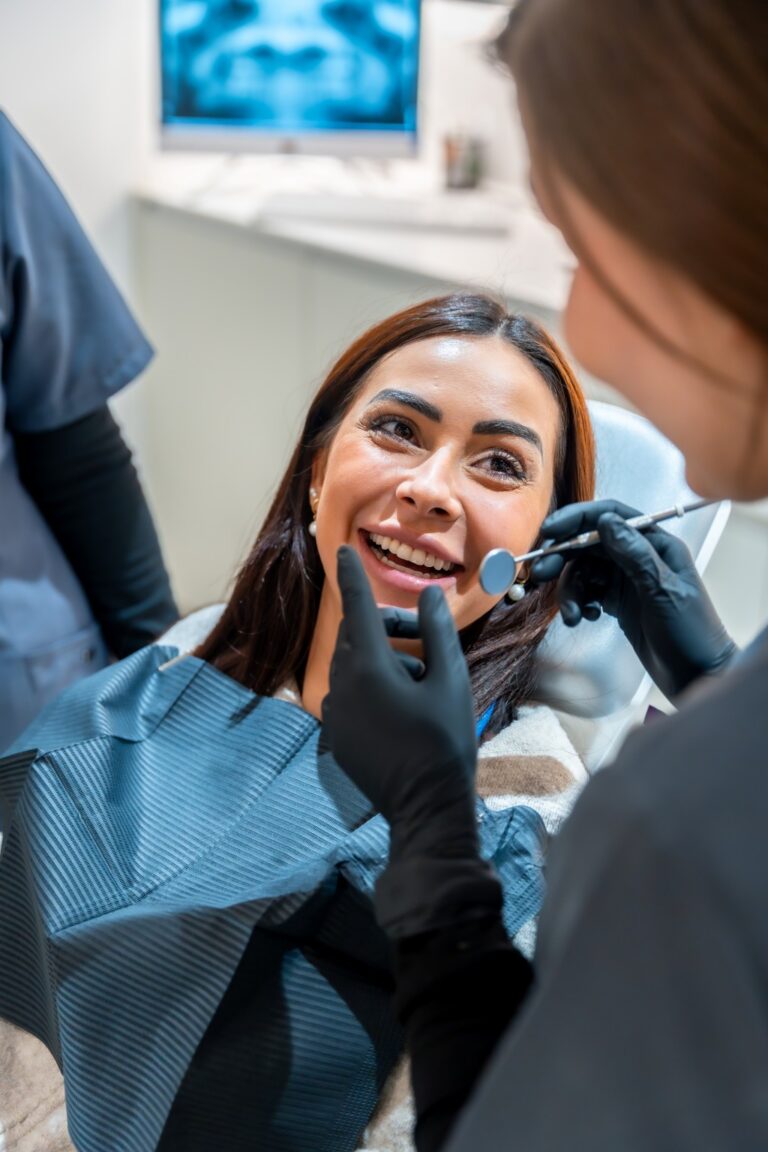
Your TMJ evaluation begins with a detailed look at your symptoms, bite, jaw movement, teeth, gums, and dental history. Our team will ask when your symptoms started, what makes them worse, whether you grind or clench, and if you have headaches, ear pressure, jaw locking, or tooth sensitivity.
We may examine how your teeth come together, check for tooth wear, feel the jaw muscles, listen for joint sounds, and evaluate your range of motion. Digital images may be recommended if we need to check tooth roots, bone support, restorations, or other dental concerns.
After the evaluation, we explain what we see and what may be contributing to your symptoms. TMJ discomfort can have more than one cause, so the goal is to identify the factors that are most relevant to your mouth and jaw.
Common Causes of TMJ Symptoms
TMJ symptoms can develop for several reasons. Understanding the cause helps us recommend the right plan.
Teeth grinding and clenching
Grinding and clenching, also called bruxism, can overwork the jaw muscles and place stress on the joints. This is one of the most common reasons patients experience jaw soreness, morning headaches, and tooth wear.
Bite imbalance
If the teeth do not come together evenly, certain areas may take more pressure than others. This can contribute to muscle tension, tooth wear, cracked teeth, or jaw discomfort.
Stress-related muscle tension
Many patients clench their jaw during stress, concentration, exercise, or sleep. Over time, this can lead to soreness in the jaw, face, temples, and neck.
Tooth wear or damaged restorations
Worn teeth, broken fillings, uneven crowns, or damaged dental work can affect the way the bite comes together. This may increase strain on the jaw.
Jaw injury or trauma
A past injury to the jaw, head, face, or neck can contribute to joint or muscle discomfort.
Arthritis or joint inflammation
Some TMJ symptoms may be related to inflammation or joint changes. If we suspect a more complex joint issue, additional evaluation may be recommended.
TMJ and Teeth Grinding
Teeth grinding can happen during the day or while sleeping. Nighttime grinding is especially difficult because patients may not know it is happening. Instead, they may notice the effects, such as jaw soreness, tooth sensitivity, worn enamel, chipped teeth, or damaged restorations.
During your exam, we look for signs that grinding may be affecting your teeth and jaw. These signs may include flattened tooth surfaces, small cracks, gumline notches, bite changes, or soreness in the jaw muscles.
If grinding is part of the problem, a custom night guard may be recommended to help protect your teeth and reduce the direct pressure caused by clenching and grinding.
TMJ and Headaches
Jaw tension can contribute to headaches, especially around the temples, forehead, or sides of the head. Some patients wake up with headaches because they clench or grind during sleep. Others notice tension headaches during the day after holding their jaw tight.
TMJ-related headaches can overlap with other headache causes, so a dental evaluation is only one part of understanding the issue. If your symptoms suggest a medical concern, we may recommend follow-up with a physician or specialist.
If your headaches are connected to jaw tension, bite pressure, or grinding, dental treatment may help reduce one of the contributing factors.
TMJ and Tooth Damage
TMJ-related clenching and grinding can cause visible damage over time. Teeth may become shorter, flatter, chipped, cracked, or more sensitive. Fillings, crowns, veneers, bonding, bridges, and implant restorations may also experience added stress.
If tooth damage is present, we first try to understand why it is happening. Repairing a chipped or worn tooth without addressing grinding or bite pressure may lead to repeated damage.
Treatment may include a night guard, bite evaluation, restorative care, crowns, bonding, or other services depending on the condition of the teeth.
TMJ Treatment Options We May Recommend
TMJ treatment depends on the cause and severity of your symptoms. Some patients need simple protective support. Others may need restorative or bite-related care.
Custom night guards
A night guard may be recommended if grinding or clenching is contributing to jaw soreness, headaches, tooth wear, or damaged dental work. The guard creates a barrier between the teeth while you sleep.
Bite evaluation
We may evaluate how your teeth come together to see if uneven bite pressure is affecting your symptoms. If certain teeth or restorations are creating excessive contact, treatment may be discussed.
Restorative dentistry
If damaged teeth, worn enamel, broken fillings, or uneven crowns are affecting your bite, restorative treatment may be part of the plan. This may include crowns, bonding, inlays, onlays, or replacement of failing restorations.
Clear aligners or orthodontic evaluation
If tooth position is affecting your bite, clear aligners, Invisalign, or clear braces may be discussed. Orthodontic treatment is not needed for every TMJ case, but alignment can be a factor for some patients.
Home care and habit awareness
Some patients benefit from practical changes such as avoiding gum chewing, limiting hard foods, using warm compresses, practicing jaw relaxation, and becoming more aware of daytime clenching.
Referral when needed
If symptoms are severe, complex, or connected to joint disease, injury, or medical concerns, referral to a specialist may be recommended.
Custom Night Guards for TMJ Symptoms
A custom night guard is one of the most common dental options for patients with TMJ symptoms related to grinding or clenching. Unlike store-bought guards, a custom night guard is made from impressions or digital scans of your teeth.
A better fit can make the appliance more comfortable and easier to wear consistently. It can also help protect your teeth and dental work from repeated pressure.
A night guard does not always stop the grinding habit itself. Its purpose is to reduce damage and help manage the force placed on your teeth and jaw while you sleep.
TMJ Treatment and Dental Restorations
Some TMJ symptoms are connected to damaged or uneven dental restorations. A crown that sits too high, a worn filling, a broken tooth, or missing teeth can change how the bite feels. When the bite is uneven, jaw muscles may work harder to compensate.
During your evaluation, we check existing dental work and look for areas where the bite may be unstable. If a restoration is contributing to the problem, we may recommend adjusting, repairing, or replacing it.
For patients with several worn, broken, or missing teeth, a larger restorative plan may be needed to rebuild a more stable bite.
TMJ Treatment and Missing Teeth
Missing teeth can affect bite balance. When teeth are missing, nearby teeth may shift, opposing teeth may move into the open space, and chewing forces may become uneven. These changes can place more strain on the remaining teeth and jaw muscles.
If missing teeth are contributing to bite instability, replacement options may be discussed. This could include dental implants, bridges, partial dentures, or other restorations depending on your needs.
The goal is to support comfortable function, not just replace the visible tooth.
TMJ and Dental Anxiety
TMJ symptoms can be frustrating because they are not always simple to explain. Patients may feel unsure whether the issue is dental, muscular, joint-related, or stress-related. That uncertainty can make treatment feel overwhelming.
At Dental Design Studio, we start with a clear evaluation and explanation. We help you understand what signs we see, what may be contributing to your symptoms, and what options may help.
If dental anxiety has kept you from asking about jaw pain or grinding, let us know. We can begin with an exam and a conversation before any treatment decisions are made.
When to Schedule a TMJ Evaluation
You should schedule a TMJ evaluation if jaw pain, clicking, grinding, headaches, or bite discomfort is affecting your daily life. Symptoms that become more frequent, more painful, or harder to ignore should be checked.
Call Dental Design Studio if you have jaw locking, trouble opening your mouth, pain while chewing, repeated morning headaches, chipped teeth, tooth sensitivity, or visible tooth wear. Early evaluation can help identify contributing factors before more damage occurs.
If you have sudden jaw trauma, severe swelling, difficulty breathing, or symptoms that may be medical in nature, seek urgent medical care.
Membership Options for Ongoing Dental Care
Dental Design Studio offers membership options for patients who want a clearer way to manage dental care without relying on traditional insurance. Preventive visits are important for monitoring tooth wear, bite changes, jaw symptoms, grinding, clenching, and the condition of dental restorations.
Membership options may include preventive care, unlimited emergency exams, and different levels based on routine care, gum health, or dental implant maintenance.
Our team can review available membership options and help you understand what may fit your needs.
TMJ Treatment Near Dana Park and Downtown Gilbert
Dental Design Studio is located at:
2323 E Guadalupe Rd STE 101
Gilbert, AZ 85234
Phone: 480-621-5535
Our office is near Dana Park Village Square, Gilbert Road, Freestone District Park, Southeast Regional Library, Gilbert High School, and Gilbert Town Hall & Municipal Center.
We welcome patients from Val Vista Lakes, The Islands, Dana Park, Stonecreek, Freestone Station, Morrison Ranch, Downtown Gilbert, and nearby East Valley communities.
Schedule TMJ Treatment in Gilbert, AZ
If you have jaw pain, clicking, headaches, tooth wear, clenching, grinding, or bite discomfort, Dental Design Studio can help you understand what may be causing your symptoms and what options may help.
Call 480-621-5535 to schedule a TMJ evaluation in Gilbert, AZ.
Frequently Asked Questions About TMJ
What does TMJ mean?
TMJ stands for temporomandibular joint, which is the jaw joint that connects the lower jaw to the skull. Many people use “TMJ” to describe jaw pain, clicking, clenching, grinding, or joint discomfort.
What are common symptoms of TMJ problems?
Common symptoms include jaw pain, clicking, popping, headaches, facial tension, tooth sensitivity, worn teeth, difficulty chewing, and trouble opening or closing the mouth comfortably.
Can a night guard help with TMJ symptoms?
A custom night guard may help if your symptoms are related to grinding or clenching. It can help protect your teeth and reduce the direct force caused by nighttime bruxism.
Is jaw clicking always a problem?
Not always. Some people have jaw clicking without pain or limited movement. If the clicking is painful, worsening, or paired with locking or difficulty chewing, it should be evaluated.
When should I see a dentist for TMJ symptoms?
Schedule an evaluation if you have ongoing jaw pain, morning headaches, tooth wear, jaw clicking, clenching, grinding, bite discomfort, or trouble opening your mouth.