Missing teeth can affect your smile, but they can also change the way you eat, speak, and feel throughout the day. Even one missing tooth can make chewing less comfortable, create spaces where food gets trapped, or cause nearby teeth to shift over time. When several teeth are missing, the impact can be even greater.
The good news is that modern dentistry offers several ways to replace missing teeth. Dental bridges, dentures, and dental implants are three common tooth replacement options, and each one has its own purpose, benefits, and considerations. The right choice depends on your oral health, the number of teeth missing, the location of the gap, your bone and gum support, and your long-term goals.
For patients in the Greater Phoenix area, understanding these options can make the decision feel less overwhelming. At Dental Design Studios, our team helps patients compare tooth replacement solutions and choose a plan based on their needs, comfort, and overall oral health.
Why Replacing Missing Teeth Matters
Missing teeth are not only a cosmetic concern. Teeth work together as a system, and when one or more teeth are lost, the surrounding teeth, gums, jaw, and bite can all be affected.
When a gap is left untreated, nearby teeth may begin shifting toward the open space. This can change the way your bite comes together and may make certain areas harder to clean. Food and bacteria can also collect around gaps, which may increase the risk of gum irritation or decay on neighboring teeth.
Missing teeth can also affect chewing. Patients may start avoiding certain foods or chewing mostly on one side of the mouth. Over time, this can create uneven stress on the remaining teeth. Replacing missing teeth can help restore comfort, improve function, and support a more balanced bite.
What Is a Dental Bridge?
A dental bridge is a fixed restoration that replaces one or more missing teeth by “bridging” the gap between remaining teeth or dental implants. A traditional bridge usually includes artificial teeth supported by crowns placed on the neighboring teeth.
Dental bridges may be a good option when a patient is missing one tooth or a few teeth in a row and has healthy teeth on either side of the gap. The supporting teeth must be strong enough to hold the bridge and handle normal chewing pressure.
One advantage of a bridge is that it is fixed in place. Unlike removable dentures, a fixed bridge is not taken out for daily cleaning. Patients brush and floss around it, using special flossing tools when needed to clean underneath the replacement tooth. Dental Design Studios provides dental bridges for patients who may benefit from this type of restorative treatment.
When a Dental Bridge May Be Recommended
A dental bridge may be recommended when the missing tooth or teeth are surrounded by natural teeth that could benefit from crowns or can provide stable support. For example, if the teeth next to the gap already have large fillings or need crowns, a bridge may help restore the missing tooth while strengthening the supporting teeth.
Bridges may also be considered when a patient does not want removable tooth replacement or is not a candidate for dental implants. Some patients may not have enough bone support for implants without additional procedures, while others may prefer a bridge based on treatment goals or timeline.
However, a bridge is not always the right choice. If the neighboring teeth are healthy and untouched, preparing them for crowns may not be ideal. In that situation, an implant or another option may be worth discussing.
What Are Dentures?
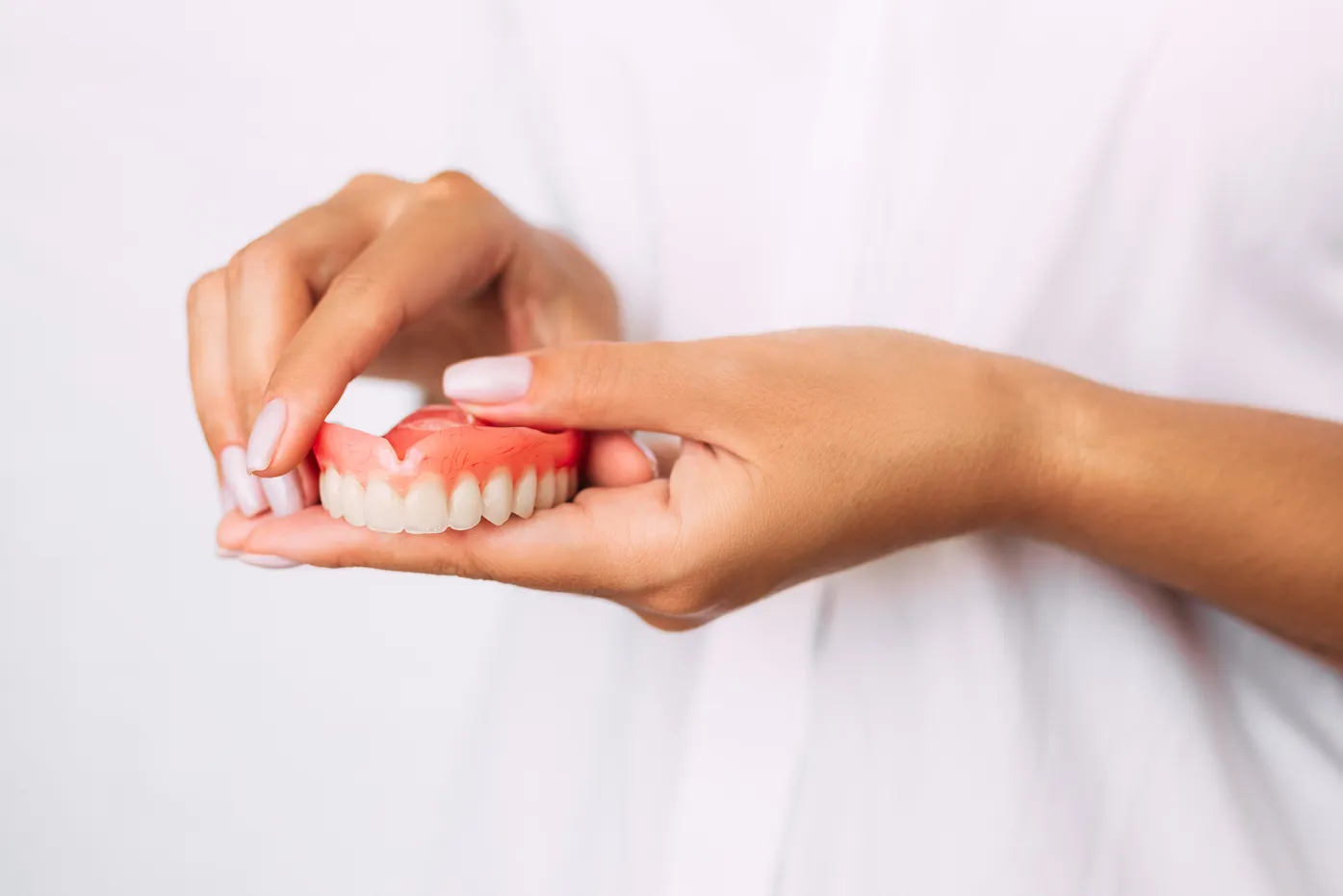
Dentures are removable appliances that replace missing teeth. They can be used when a patient is missing several teeth or a full arch of teeth. A partial denture replaces some missing teeth, while a full denture replaces all teeth in the upper or lower arch.
Dentures are custom-made to fit the mouth and restore the appearance of the smile. They can also help improve chewing and speech compared with leaving teeth unreplaced. Modern dentures can be designed to look natural and support facial appearance.
Because dentures are removable, they require daily cleaning and care outside the mouth. They may also need adjustments over time as the gums and jaw change. Dental Design Studios offers dentures for patients who need full or partial tooth replacement.
When Dentures May Be Recommended
Dentures may be recommended when a patient is missing many teeth, has teeth that cannot be restored, or needs a more comprehensive replacement option. Partial dentures can be helpful when the missing teeth are not all in one area, making a bridge less practical.
Full dentures may be recommended when all teeth in an arch are missing or need to be removed. In these cases, dentures can restore the appearance of teeth and support everyday functions like speaking and chewing.
Some patients also consider implant-supported dentures. These dentures use dental implants for added support and stability. They may be an option for patients who want more security than traditional removable dentures can provide, depending on bone support, gum health, and treatment complexity.
What Are Dental Implants?
A dental implant is a small post placed in the jawbone to serve as an artificial tooth root. Once the implant has healed and integrated with the surrounding bone, it can support a crown, bridge, or denture.
Implants are different from bridges and traditional dentures because they replace the root structure beneath the gums. This allows the restoration to be anchored to the jaw rather than resting only on the gums or relying on neighboring teeth for support.
Dental implants may be used to replace one tooth, several teeth, or a full arch of teeth. Dental Design Studios provides dental implants for patients who may be candidates for implant-supported tooth replacement.
When Dental Implants May Be Recommended
Dental implants may be recommended for patients who want a stable, long-term tooth replacement option and have the oral health needed to support implant treatment. A good candidate usually needs healthy gums, enough bone support, and overall health that allows for proper healing.
A single implant may be recommended when one tooth is missing and the neighboring teeth are healthy. In that situation, the implant can support a crown without requiring crowns on adjacent teeth.
Implants may also support bridges or dentures for patients missing multiple teeth. For full-arch tooth replacement, options such as implant-supported dentures or All-on-X dental implants may be discussed. The right approach depends on the patient’s jawbone, gum health, bite, medical history, and treatment goals.
Comparing Bridges, Dentures, and Implants
Dental bridges, dentures, and implants can all replace missing teeth, but they do so in different ways. A bridge is fixed in place and uses nearby teeth or implants for support. Dentures are removable and can replace several teeth or a full arch. Implants are placed in the jawbone and can support individual teeth, bridges, or dentures.
The number of missing teeth often plays a major role in the recommendation. One missing tooth may be replaced with a bridge or single implant. Several missing teeth may be replaced with a bridge, partial denture, or implant-supported restoration. A full arch of missing teeth may require full dentures, implant-supported dentures, or full-arch implant treatment.
The condition of the remaining teeth also matters. If nearby teeth are strong and healthy, an implant may help avoid placing crowns on those teeth. If nearby teeth already need crowns, a bridge may make sense. If many teeth are missing or spread throughout the mouth, a partial denture may be more practical.
Comfort and Stability
Comfort and stability are major concerns for patients replacing missing teeth. Fixed bridges and implant restorations are not removed daily, which many patients find convenient. Dentures are removable, which can make cleaning easier but may require an adjustment period.
Traditional dentures rest on the gums and may feel less stable than fixed options, especially in the lower arch. Fit can also change over time as the mouth changes. Regular dental visits are important so the dentist can check fit, comfort, and function.
Implant-supported options may provide added stability for certain patients. However, not every patient is a candidate for implants, and implant treatment may require more planning. A consultation is needed to determine whether implants can safely support a crown, bridge, or denture.
Appearance and Confidence
Tooth replacement is also about confidence. Missing teeth can make patients feel self-conscious when smiling, laughing, or speaking. Bridges, dentures, and implants can all be designed to improve the appearance of the smile.
A bridge can fill a visible gap with artificial teeth designed to blend with the surrounding smile. Dentures can restore the look of a complete smile when several or all teeth are missing. Implant-supported crowns, bridges, and dentures can also be customized for a natural appearance.
The best-looking result depends on more than the restoration itself. Gum health, bone support, bite alignment, facial structure, and the condition of the remaining teeth all affect the final outcome. That is why treatment planning is so important.
Cleaning and Maintenance
Every tooth replacement option requires maintenance. A bridge must be cleaned carefully around the crowns and underneath the artificial tooth. Special floss threaders or interdental brushes may be recommended to clean areas a standard toothbrush cannot reach.
Dentures should be cleaned daily and removed as directed by the dental team. The gums and any remaining teeth still need attention, even when a denture replaces several teeth. Patients with full dentures should still schedule dental visits so the dentist can check the gums, fit, bite, and oral tissues.
Dental implants also need consistent care. While implants cannot get cavities, the gums and bone around them must stay healthy. Brushing, flossing, routine cleanings, and regular exams help protect implant-supported restorations over time.
Bone and Gum Health Considerations
Bone and gum health can affect which tooth replacement options are available. Dental implants require enough healthy bone to support the implant. If bone loss has occurred, additional treatment may be needed before implant placement can be considered.
Gum health is also important. Gum disease can affect the stability of natural teeth and implants. If active gum disease is present, it often needs to be addressed before final tooth replacement treatment begins.
Dentures and bridges may also be affected by gum and bone changes. A denture that once fit well may become loose as the jaw changes. A bridge depends on the health of the supporting teeth and gums. No matter which option is chosen, long-term oral health plays a major role in success.
Treatment Timeline and Planning
The treatment timeline varies by option. A dental bridge may be completed in fewer visits than implant treatment, depending on the case. Dentures may require several appointments for impressions, fittings, and adjustments. Implant treatment often involves planning, placement, healing time, and restoration.
Some patients qualify for same-day dentistry options for certain procedures, but same-day treatment depends on oral health, case complexity, and the type of restoration being planned. Same-day options should not be assumed for every bridge, denture, or implant case.
During your consultation, your dentist can explain the expected timeline and whether treatment can be phased. This is especially helpful for patients who need several teeth replaced or have other dental concerns that must be addressed first.
How Your Dentist Helps You Choose
Choosing between a bridge, denture, or implant starts with a complete dental evaluation. Your dentist will examine your teeth, gums, bite, jaw, and existing dental work. X-rays or 3D imaging may be recommended to evaluate the roots, bone, and surrounding structures.
Your dentist will also ask about your goals. Some patients prioritize fixed treatment. Others want a removable option. Some want to replace one missing tooth, while others need to restore an entire arch. Your comfort, oral health, and long-term maintenance needs all matter.
A good treatment plan should explain the benefits, limitations, and responsibilities of each option. You should understand what is being recommended, why it fits your situation, and what alternatives may be available.
Questions To Ask About Tooth Replacement
Before choosing a tooth replacement option, it can help to ask a few clear questions during your appointment. Ask whether you are a candidate for bridges, dentures, implants, or implant-supported options. Ask how each option would affect your remaining teeth, chewing function, and daily care.
You may also want to ask what the process involves, how long treatment may take, whether any preliminary care is needed, and how the restoration should be maintained. For implant treatment, ask about bone support, gum health, healing time, and the type of final restoration.
The goal is not to choose the most popular option. The goal is to choose the option that fits your oral health, comfort, lifestyle, and long-term needs.
Tooth Replacement Options in the Greater Phoenix Area
Dental bridges, dentures, and implants can all help replace missing teeth, but the best option depends on your unique smile. A bridge may be appropriate for one or more missing teeth when nearby teeth can provide support. Dentures may be helpful when several or all teeth are missing. Dental implants may provide a stable foundation for crowns, bridges, or dentures when the patient is a good candidate.
Dental Design Studios provides comprehensive restorative dentistry for patients throughout the Greater Phoenix area. Whether you are missing one tooth, several teeth, or a full arch, our team can evaluate your oral health and explain your tooth replacement options.
To take the next step, contact your local Dental Design Studios office to schedule a consultation.
Dental Care Across the Greater Phoenix Area
Dental Design Studios has nine convenient dental office locations throughout the Greater Phoenix area, making it easier for patients to access quality dental care close to home. Our offices serve patients in Avondale, Chandler, Glendale, Phoenix, Peoria, Gilbert, Scottsdale, and nearby communities.
Find a Dental Design Studios location near you:
- Apple Tree Dental Studio in Avondale
- Arizona Family Dental in Chandler
- 75th Ave Dental Studio in Glendale
- Happy Valley Dental Studio in Phoenix
- Hatcher Dental Studio in Phoenix
- Smile Dental Studio in Phoenix
- Thunderbird Dental Studio in Peoria
- Dental Design Studio in Gilbert
- Scottsdale Dental Studio in Scottsdale