Why Patients Get a Dental Crown
Dentists utilize dental crowns in a variety of treatment situations.
- Dental Bridge
- Prevent Tooth Decay
- Prevent Tooth Loss
- Cover Teeth With Root Canal

With 9 Convenient Locations in the Phoenix Area
Dentists utilize dental crowns in a variety of treatment situations.

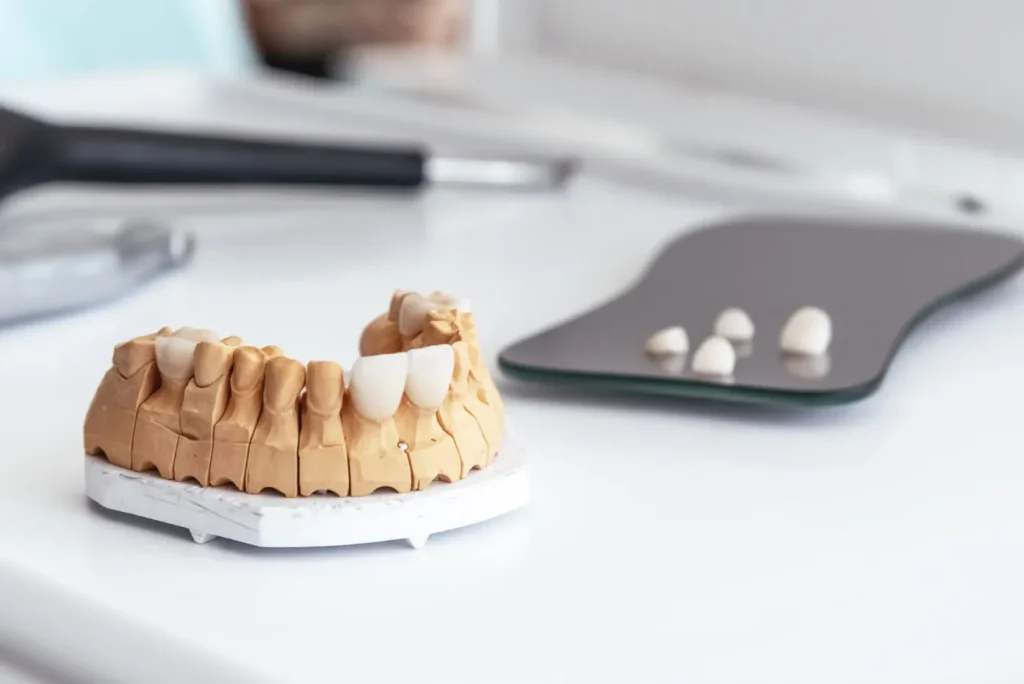
According to the American College of Prosthodontists, the most common dental restoration is a single dental crown. Dentists utilize dental crowns in a variety of treatment situations. Crowns may help protect vulnerable teeth from further decay. They may cap damaged teeth and cover deep fillings. Crowns often complete dental implants or cover teeth treated with root canals. Dentists can work with their dental lab and the patient to create custom-fitting dental crowns that may restore a tooth’s shape and size to near perfect.

Dental crown treatment is available at Dental Design Studio in Glendale and the surrounding area. Crowns help restore a tooth that has significant damage with a custom-sized cap that fits over the old tooth. We provide dental crowns and restorations for our patients. For broken, damaged, or decaying teeth, crowns may be the right solution.
It may take a few appointments for a patient to receive a crown. In many cases, the dental crown procedure is part of another dental treatment plan, such as a root canal. Here is the step-by-step process for getting a dental crown:
1. Before the Crown
The dentist treats any problems before starting the dental crown creation process. Any infections or cavities must be addressed or filled. Sometimes, an old crown needs replacement. In this case, the dentist will remove the remnants first.
2. Preparation
Next, the dentist must prepare the tooth for the crown. The dentist or another member of our team will shave down the tooth to make room for the crown. Then, the dental staff makes a series of impressions to send to the lab. Some patients receive a temporary crown at the end of this appointment.
3. Crown Delivery
Once the crown is ready for delivery, the patient must return to the office for placement. First, the dentist tries on the crown to make sure it feels and looks right in the mouth. If it fits correctly, the dentist uses dental cement to glue it in place permanently.