
Dental technology has changed the way patients experience dental care. Instead of relying only on verbal explanations or traditional impressions, many modern dental offices now use digital tools to help evaluate oral health, plan treatment, and show patients what is happening inside their mouths more clearly.
For patients, this can make a major difference. Dental concerns are not always easy to understand when they are hidden between teeth, below the gumline, or inside the jaw. Digital dental technology can give both the dentist and the patient a clearer view, which may make treatment recommendations easier to understand.
For patients in the Greater Phoenix area, Dental Design Studios uses advanced digital technology to support general, cosmetic, restorative, orthodontic, and implant-related care. Tools such as digital imaging, 3D cone beam scans, intraoral scanning, intraoral photos, and computer-assisted design can help patients feel more informed when making decisions about their smiles.
What Is Digital Dental Technology?
Digital dental technology refers to tools that capture, process, or display dental information digitally. These tools may include digital X-rays, 3D cone beam imaging, intraoral cameras, intraoral scanners, and computer-assisted design and manufacturing systems.
The goal of digital dentistry is not to replace a dentist’s judgment. Instead, it gives the dental team more information to evaluate the teeth, gums, bone, bite, and surrounding structures. This can support better communication, more detailed treatment planning, and a more visual patient experience.
For patients, digital technology can make dental visits feel less mysterious. When you can see images, scans, or models of your own teeth, it is easier to understand why a filling, crown, implant, orthodontic treatment, or periodontal care may be recommended.
Why Visual Information Matters in Dentistry
Dental problems are often difficult for patients to see on their own. A tooth may look fine from the outside but have decay between teeth. A filling may appear normal but have damage around the edges. A missing tooth may seem like a simple gap, but the bone and bite around it also matter.
Digital tools can help bring those hidden details into view. When patients can see an image of a cavity, crack, bone level, impacted tooth, or worn restoration, treatment recommendations may feel more understandable.
This visual approach can also support better conversations. Instead of simply being told that a tooth needs treatment, patients can ask questions about what they are seeing, how serious the concern is, and what options may be available.
Digital X-Rays and Dental Diagnosis
Digital X-rays are commonly used to help dentists see areas that are not visible during a standard exam. They may show cavities between teeth, bone levels, tooth roots, infections, impacted teeth, or concerns beneath existing dental work.
Digital X-rays can be especially helpful during routine exams, emergency dental visits, restorative treatment planning, and children’s dental care. They allow the dental team to evaluate more than what can be seen with the eye alone.
Not every patient needs the same X-rays at every appointment. Your dentist will consider your age, symptoms, oral health history, cavity risk, gum health, and treatment needs before recommending imaging. The goal is to use the right imaging when it provides useful information for diagnosis or treatment planning.
3D Cone Beam Imaging for More Detailed Views
Some dental concerns require more detail than a standard 2D X-ray can provide. In those cases, 3D cone beam imaging may be recommended. Cone beam technology creates three-dimensional images of the teeth, jawbone, roots, and surrounding structures.
This type of imaging can be helpful for certain implant cases, oral surgery planning, impacted teeth, complex root concerns, and other situations where a more complete view is needed. It may help the dentist understand bone volume, tooth position, root shape, or nearby anatomical structures.
Dental Design Studios offers 3D cone beam dental scans for cases where advanced imaging may support treatment planning. However, CBCT is not necessary for every patient. Your dentist will recommend it only when the additional information may help guide care.
Intraoral Scanners and Digital Impressions
Traditional dental impressions often involve trays filled with impression material. While traditional impressions are still used in dentistry, many patients appreciate digital scanning when it is appropriate because it can create a detailed 3D model of the teeth without the same impression material experience.
An intraoral scanner captures digital images of the teeth and gums. These images are used to create a digital model that can help with crowns, bridges, clear aligners, retainers, whitening trays, implants, and other types of treatment planning.
Dental Design Studios uses TRIOS intraoral scanning to support digital impressions and treatment planning. For patients, this can make it easier to see tooth shape, spacing, bite relationships, and areas that may need attention.
Intraoral Photos and Patient Education
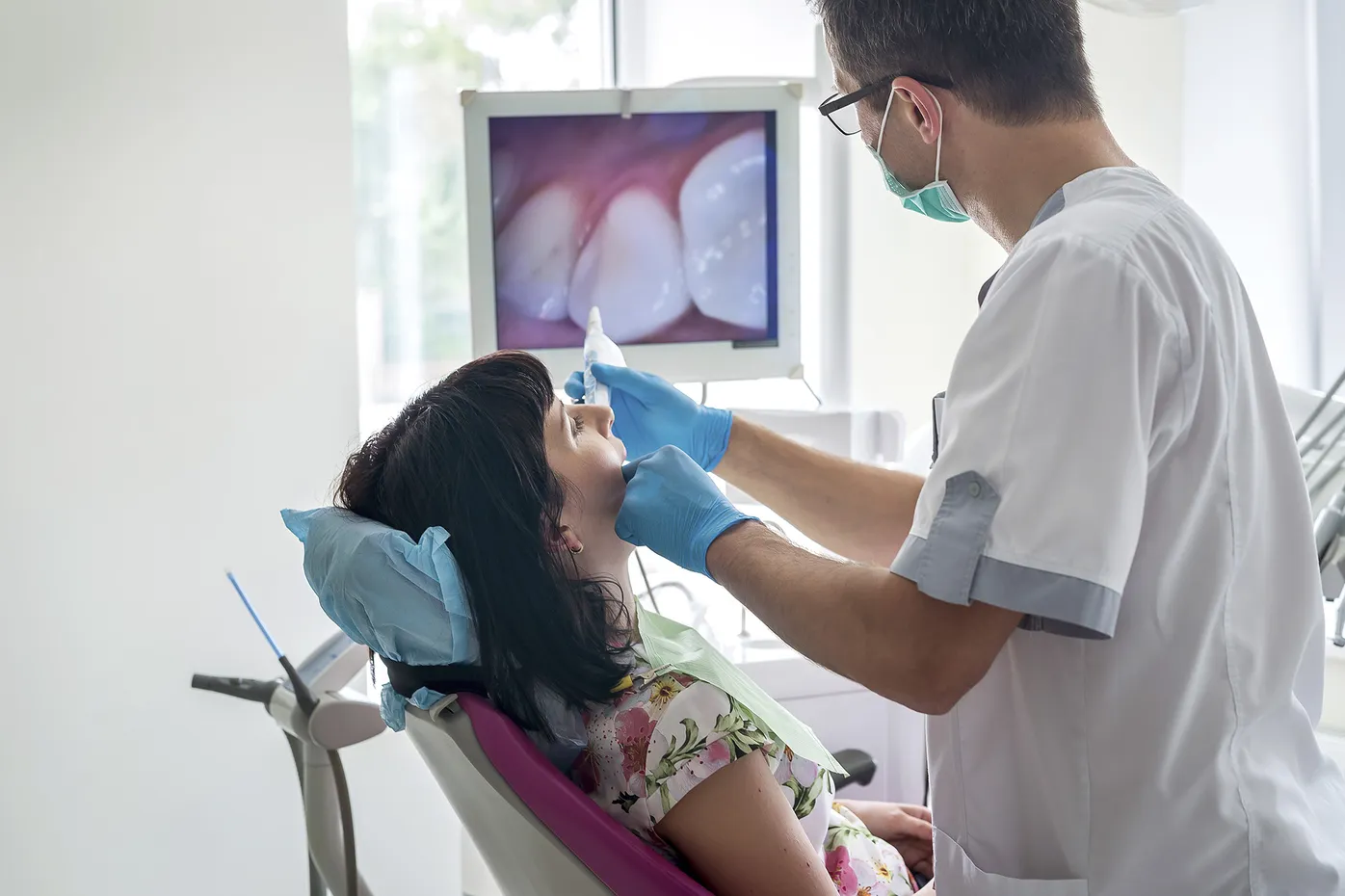
Intraoral photos can help patients see specific areas of their mouths in close detail. These images may show cracked teeth, worn edges, gum inflammation, plaque buildup, damaged restorations, or cosmetic concerns.
This can be helpful because many dental problems are hard to see in a mirror. A close-up image gives patients a better view of what the dentist is describing. It can also help patients compare before-and-after changes or track areas that are being monitored over time.
Intraoral photos are especially useful for patient education. When patients can see what is happening, they may feel more confident asking questions and making informed decisions about their treatment options.
Digital Technology and Same-Day Dentistry
Digital technology can also support certain same-day dentistry options. For example, digital scans and computer-assisted design may help with planning and creating some restorations more efficiently.
Dental Design Studios provides same-day dentistry for certain treatments, including crowns, veneers, dental bonding, teeth whitening, and some implant procedures. Same-day care depends on the patient’s oral health, treatment complexity, and whether the specific procedure can be completed safely and effectively in that timeframe.
It is important not to assume that every treatment can be completed in one visit. A tooth with infection, severe damage, gum concerns, bite complications, or complex cosmetic needs may require a staged approach. Digital tools can help with efficiency, but quality and proper planning still come first.
How Technology Supports Dental Crowns and Restorations
Restorative dentistry often depends on precision. A crown, bridge, filling, or veneer needs to fit properly, feel comfortable, and work with the patient’s bite. Digital scans and design tools can help the dental team plan restorations with more detailed information.
For dental crowns, digital impressions may help capture the prepared tooth and surrounding bite. Computer-assisted design can then support the shape and fit of the restoration. When same-day technology is appropriate, the crown may be designed and created more efficiently.
Digital tools can also help patients understand why a restoration is needed. For example, a dentist may use images or scans to show a cracked tooth, worn enamel, failing filling, or bite-related issue. This makes the treatment conversation more visual and easier to follow.
How Technology Supports Dental Implants
Dental implants require careful planning because they involve the jawbone, gums, bite, and final restoration. Digital imaging can help the dentist evaluate bone support, tooth position, and surrounding structures before recommending implant treatment.
3D cone beam scans may be especially useful in implant planning because they provide a more detailed view of the jawbone and anatomy. This can help the dental team determine whether an implant may be appropriate and whether additional treatment is needed before placement.
Digital scanning may also be used when planning the implant restoration, such as a crown, bridge, or denture. Dental Design Studios provides dental implant care for patients who may be candidates for tooth replacement, and digital tools may support the planning process when appropriate.
How Technology Supports Orthodontic Treatment
Patients considering Invisalign, clear braces, or other orthodontic options often want to understand how their teeth and bite may need to move. Digital scans can help create a clearer view of tooth alignment, spacing, crowding, and bite relationships.
For clear aligner planning, digital models can help the dental team evaluate whether aligners may be appropriate. Patients may also better understand why one orthodontic option may be recommended over another.
Not every patient is a candidate for Invisalign or clear aligners. Tooth position, bite complexity, gum health, age, and compliance all matter. Digital technology can help with evaluation, but the final recommendation should always come from a personalized orthodontic consultation.
How Technology Supports Cosmetic Dentistry
Cosmetic dentistry is highly visual, so digital tools can be helpful when discussing goals and options. Patients considering veneers, bonding, whitening, gum contouring, or smile makeovers often want to understand what can realistically be improved.
Photos, scans, and digital models can help the dentist evaluate tooth shape, symmetry, color, spacing, gumline balance, and bite function. This can lead to a more informed conversation about which cosmetic options may fit the patient’s goals.
Digital technology can also help patients understand why cosmetic treatment may need to be paired with restorative or orthodontic care. For example, a patient who wants veneers may first need gum treatment, bite evaluation, or orthodontic planning to support a better long-term result.
How Technology Helps Patients Compare Treatment Options
One of the biggest benefits of digital dental technology is that it can help patients compare options more clearly. A patient with a damaged tooth may need to understand the difference between a filling and a crown. A patient with missing teeth may need to compare bridges, dentures, and implants.
Digital images and scans can help explain why one option may be more appropriate than another. For example, if a tooth has limited remaining structure, the dentist can show why a crown may provide more support than a filling. If a patient is missing a tooth, imaging can help evaluate whether an implant may be possible.
This does not mean the most advanced option is always the best option. The right treatment depends on the patient’s health, goals, anatomy, budget considerations, timeline, and long-term maintenance needs. Technology supports the conversation, but it does not make the decision by itself.
Digital Dentistry and Dental Anxiety
For some patients, dental anxiety is connected to uncertainty. They may feel nervous because they do not know what is happening, what treatment involves, or why the dentist is recommending a certain procedure.
Digital technology can help reduce some of that uncertainty by making the appointment more transparent. Seeing images, scans, or models can help patients feel more involved in the process.
Technology may also help with communication. Patients can ask questions while looking at the same visual information as the dental team. This can make the conversation feel more collaborative and less intimidating.
What Digital Technology Cannot Do
Digital dental technology is helpful, but it has limits. A scan or image does not replace a complete dental exam. The dentist still needs to evaluate symptoms, medical history, gum health, bite function, risk factors, and patient goals.
Technology also does not guarantee a specific outcome. Every patient’s mouth is different, and treatment success depends on many factors, including oral hygiene, healing response, materials, bite forces, and regular maintenance.
The best dental care combines advanced tools with clinical experience, patient education, and personalized planning. Digital dentistry can provide valuable information, but your dentist uses that information as part of a broader evaluation.
Questions To Ask About Digital Dental Technology
If your dentist recommends digital imaging, scanning, or another technology-supported service, it is reasonable to ask questions. You may want to ask what the technology helps show, why it is being recommended, and how it will affect your treatment plan.
You can also ask whether imaging is necessary for your specific situation, what alternatives may be available, and how the information will be used. A good dental team should be able to explain the purpose of each tool in a clear, patient-friendly way.
These questions can help you feel more informed and more comfortable moving forward with care.
Digital Dental Technology in the Greater Phoenix Area
Digital dental technology can help patients better understand their oral health and treatment options. From digital X-rays and 3D cone beam imaging to intraoral scanning, intraoral photos, and computer-assisted design, these tools can support clearer communication and more personalized care.
Dental Design Studios uses advanced digital technology to support preventive, cosmetic, restorative, orthodontic, implant, and family dental care throughout the Greater Phoenix area. Whether you are due for a routine exam, considering cosmetic treatment, replacing missing teeth, or planning restorative care, our team can help you understand your options.
To schedule an appointment, contact your local Dental Design Studios office today.
Dental Care Across the Greater Phoenix Area
Dental Design Studios has nine convenient dental office locations throughout the Greater Phoenix area, making it easier for patients to access quality dental care close to home. Our offices serve patients in Avondale, Chandler, Glendale, Phoenix, Peoria, Gilbert, Scottsdale, and nearby communities.
Find a Dental Design Studios location near you:
- Apple Tree Dental Studio in Avondale
- Arizona Family Dental in Chandler
- 75th Ave Dental Studio in Glendale
- Happy Valley Dental Studio in Phoenix
- Hatcher Dental Studio in Phoenix
- Smile Dental Studio in Phoenix
- Thunderbird Dental Studio in Peoria
- Dental Design Studio in Gilbert
- Scottsdale Dental Studio in Scottsdale