
Straightening your teeth can improve more than the appearance of your smile. Orthodontic treatment can also support better bite alignment, make teeth easier to clean, and help reduce certain types of uneven wear. For many adults and teens, the biggest question is not whether they want a straighter smile, but which treatment option makes the most sense for their needs.
Two common options patients ask about are Invisalign and clear braces. Both are designed to move teeth into better alignment, but they work in different ways. Invisalign uses a series of removable clear aligners, while clear braces use brackets and wires that are designed to be less noticeable than traditional metal braces.
If you are comparing Invisalign vs. clear braces in the Greater Phoenix area, the right choice depends on your teeth, bite, treatment goals, lifestyle, and how complex your orthodontic needs are. Understanding the differences can help you feel more prepared when you meet with your dental team.
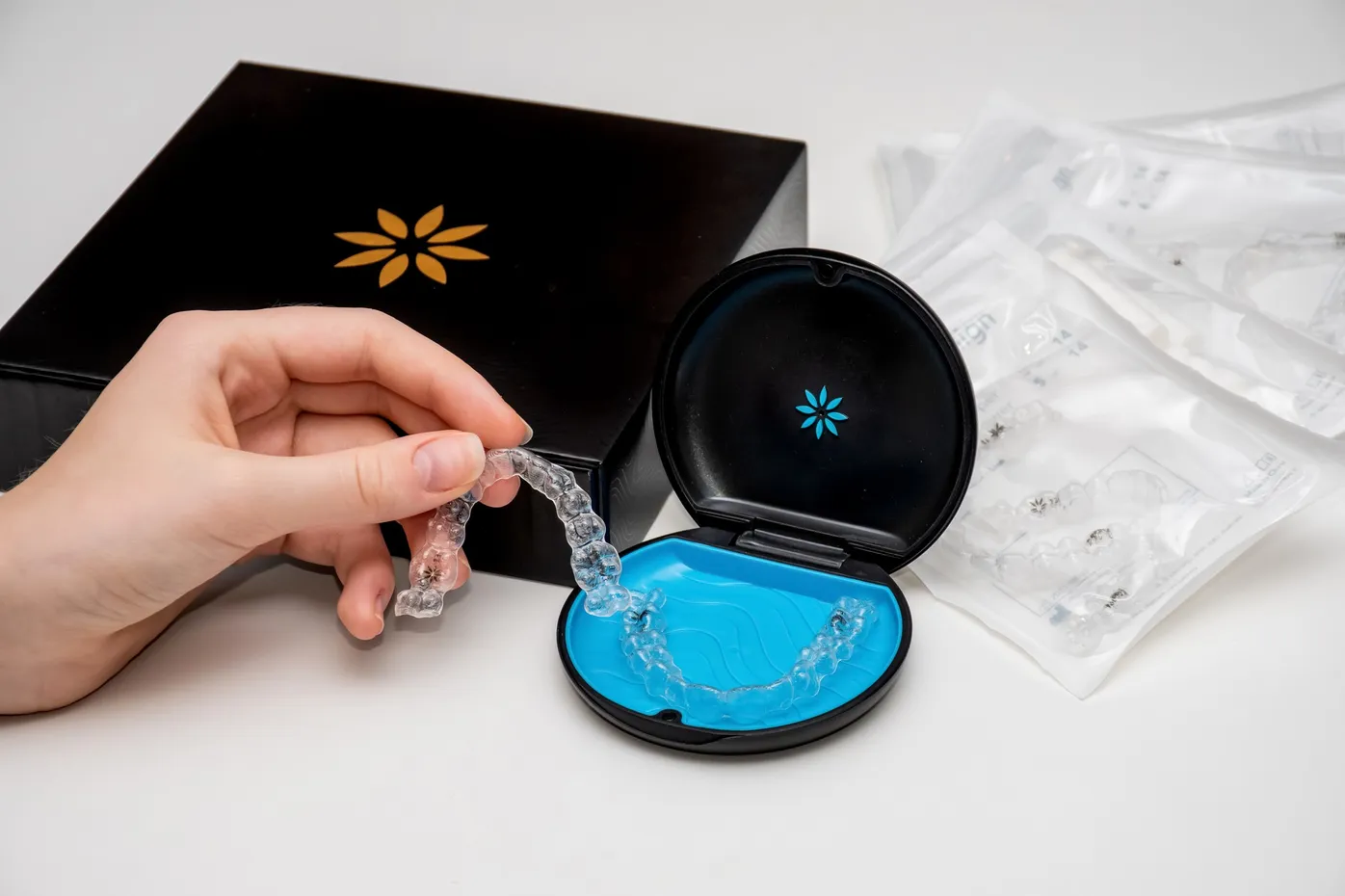
What Is Invisalign?
Invisalign is a clear aligner system that uses a series of removable trays to gradually shift teeth into better alignment. The aligners are custom-made to fit over the teeth and are typically changed at regular intervals as treatment progresses.
One of the biggest reasons patients ask about Invisalign is its discreet appearance. The aligners are clear, smooth, and removable, which makes them appealing for patients who want an orthodontic option that fits into daily life with less visibility than traditional braces.
Because Invisalign aligners can be removed, patients can take them out to eat, brush, and floss. That flexibility can make daily oral hygiene easier compared with braces. However, Invisalign only works as planned when patients wear the aligners consistently for the recommended amount of time each day. If aligners are frequently removed or forgotten, treatment progress can be affected.
Dental Design Studios offers Invisalign for patients who may be candidates for clear aligner treatment. A consultation is needed to determine whether Invisalign is appropriate based on tooth position, bite alignment, oral health, and treatment goals.
What Are Clear Braces?
Clear braces are similar to traditional braces in the way they move teeth, but they are designed to be less noticeable. Instead of fully metal brackets, clear braces often use tooth-colored or translucent materials that blend more naturally with the smile. They still rely on brackets and wires to guide teeth into better position.
Clear braces may appeal to patients who want the strength and consistency of braces but prefer a more subtle appearance. Since they are fixed to the teeth, patients do not have to remember to wear them the way they do with removable aligners. This can be helpful for patients who may struggle with aligner compliance.
Because clear braces stay on the teeth throughout treatment, they can be effective for a wide range of alignment concerns. They may be recommended for cases that require more controlled movement or when removable aligners are not the best fit.
Patients interested in clear braces should have an orthodontic evaluation to understand whether braces or aligners may be better suited to their needs.
How Invisalign and Clear Braces Are Similar
Invisalign and clear braces share the same general goal: helping patients achieve better tooth alignment. Both options can address concerns such as crowding, spacing, and certain bite-related issues, depending on the severity and complexity of the case.
Both treatments also require a personalized plan. Orthodontic care is not one-size-fits-all. The dentist must evaluate the patient’s teeth, jaw, bite, gum health, and overall oral health before recommending an option.
Another similarity is that both treatments require commitment. Invisalign requires consistent wear time, while clear braces require careful cleaning and attention to food choices. In either case, patients need to follow instructions, attend checkups, and keep up with home care to support treatment progress.
The Biggest Difference: Removable vs. Fixed Treatment
The most important difference between Invisalign and clear braces is that Invisalign aligners are removable, while clear braces are fixed to the teeth.
With Invisalign, patients can remove the aligners for meals, brushing, flossing, and special situations. This can be convenient, especially for patients who do not want food restrictions or who want to maintain a more familiar oral hygiene routine. However, the removable design also puts more responsibility on the patient. Aligners need to be worn consistently to work properly.
Clear braces stay on the teeth until the dental team removes them. This means they are always working, regardless of whether the patient remembers to put them in. For some patients, especially teens or busy adults who may misplace aligners, fixed braces can be a practical advantage.
The better option depends on lifestyle and discipline as much as clinical needs. A patient who wants flexibility and can reliably wear aligners may prefer Invisalign. A patient who wants a treatment that is always in place may feel more confident with clear braces.
Appearance and Confidence During Treatment
Both Invisalign and clear braces are designed to be more discreet than traditional metal braces, but Invisalign is usually the less visible option. The clear trays fit closely over the teeth, making them difficult to notice in many everyday situations.
Clear braces are more visible than Invisalign because they still use brackets and wires. However, they can be much less noticeable than standard metal braces, especially when the brackets are tooth-colored or translucent.
Appearance matters for many patients, especially adults who speak with clients, attend meetings, take photos, or simply want to feel comfortable during treatment. Teens may also appreciate a less noticeable orthodontic option during school, activities, and social events.
That said, appearance should not be the only factor. The best treatment is the one that can safely and effectively address the patient’s orthodontic needs.
Eating and Drinking With Invisalign or Clear Braces
Eating is one of the areas where patients notice a major difference between Invisalign and braces.
With Invisalign, aligners are removed before eating. This means patients can usually continue eating the foods they enjoy, as long as they brush and clean their teeth before putting the aligners back in. Drinking water while wearing aligners is usually fine, but patients are generally advised to remove aligners for most other beverages to help protect the trays and teeth.
With clear braces, the brackets stay on the teeth during meals. Patients may need to avoid hard, sticky, or chewy foods that can damage brackets or wires. Foods like hard candies, sticky caramels, popcorn kernels, and chewing ice can create problems during braces treatment.
For some patients, Invisalign offers more freedom around meals. For others, clear braces are worth the food adjustments because they provide a fixed treatment option that does not rely on remembering to reinsert aligners after eating.
Brushing, Flossing, and Oral Hygiene
Oral hygiene is important during any orthodontic treatment. Teeth can be more vulnerable to plaque buildup when appliances are involved, so patients need to be consistent with brushing, flossing, and dental checkups.
Invisalign can make hygiene simpler because the aligners are removed before brushing and flossing. Patients can clean their teeth much like they normally would. However, they also need to clean the aligners and avoid putting them back over teeth that have not been brushed after meals or sugary drinks.
Clear braces require more detailed cleaning because food and plaque can collect around brackets and wires. Patients may need special tools such as floss threaders, interdental brushes, or a water flosser to clean effectively around the appliance.
Neither option eliminates the need for good home care. Patients who choose Invisalign need to be disciplined about cleaning both teeth and aligners. Patients who choose clear braces need to be thorough around brackets and wires to protect their enamel and gum health.
Comfort and Daily Adjustment
Invisalign aligners are made from smooth plastic, which many patients find comfortable compared with brackets and wires. However, aligners can still cause pressure or soreness when a new set begins shifting the teeth.
Clear braces may involve more irritation at first because brackets and wires can rub against the lips or cheeks. Orthodontic wax can sometimes help protect sensitive areas while the mouth adjusts. Patients may also feel pressure after wire adjustments.
Some discomfort is common with both treatments because teeth are being moved. That does not mean treatment should be extremely painful. If a patient experiences sharp pain, a broken bracket, a loose wire, or an aligner that does not fit properly, they should contact the office for guidance.
Treatment Complexity and Candidacy
Not every patient is a candidate for Invisalign, and not every patient needs clear braces. The right recommendation depends on the position of the teeth, the bite, the roots, the jaw relationship, gum health, and the amount of movement needed.
Invisalign may be a strong option for mild to moderate crowding, spacing, or certain bite concerns. However, more complex cases may require braces or another orthodontic approach. Patients also need to be able to wear the aligners as directed.
Clear braces may be recommended when more controlled movement is needed or when a patient would benefit from fixed appliances. Since braces are attached to the teeth, they can be useful for patients who may not be ideal candidates for removable aligners.
A consultation is the only reliable way to know which option may be right. Dental imaging, a bite evaluation, and a discussion of goals all help guide the recommendation.
Lifestyle Factors To Consider
Lifestyle plays a major role in choosing between Invisalign and clear braces. A busy adult who travels often may appreciate the flexibility of Invisalign, but only if they can keep track of aligners and follow wear-time instructions. A teen involved in school, sports, and activities may prefer Invisalign for appearance, but clear braces may be more reliable if compliance is a concern.
Patients who snack frequently may find Invisalign less convenient because the aligners must be removed before eating and teeth should be cleaned before reinserting them. Patients who do not want food restrictions may still prefer aligners, while those who want a fixed appliance may accept the dietary changes that come with braces.
There is no universal right answer. The best choice is the one that fits both the clinical situation and the patient’s daily habits.
What Happens at an Orthodontic Consultation?
An orthodontic consultation gives your dental team a chance to evaluate your smile and explain your options. The appointment may include a visual exam, digital scans, photographs, X-rays, or other imaging when needed.
Your dentist will look at tooth alignment, bite position, spacing, crowding, jaw relationship, and overall oral health. They may also ask about your goals, whether you prefer removable or fixed treatment, and how important appearance is during treatment.
This is also the right time to ask practical questions. You may want to ask how often appointments are needed, how oral hygiene should be handled, what foods may need to be avoided, whether retainers will be needed after treatment, and what could affect your treatment timeline.
What Happens After Orthodontic Treatment?
Whether a patient chooses Invisalign or clear braces, retainers are often needed after treatment. Teeth can shift over time, and retainers help maintain the new position after active treatment is complete.
The type of retainer and wear schedule depends on the patient’s needs and the provider’s recommendation. Some patients may wear retainers full-time at first and then transition to nighttime wear. Others may receive different instructions based on their case.
Retention is an important part of protecting the results of orthodontic treatment. Patients who do not wear retainers as directed may notice their teeth gradually shifting again.
Choosing Between Invisalign and Clear Braces in the Greater Phoenix Area
Invisalign and clear braces can both help patients work toward a straighter, healthier smile. Invisalign offers removable, discreet aligners that fit easily into many lifestyles, while clear braces provide a fixed option that may be better for certain cases or patients who prefer treatment that stays in place.
The right choice depends on your oral health, alignment needs, bite, lifestyle, and ability to follow treatment instructions. A personalized consultation is the best way to understand which option may be appropriate.
Dental Design Studios offers orthodontic options for patients throughout the Greater Phoenix area, including Invisalign and clear braces. If you are ready to explore your options for a straighter smile, contact your local Dental Design Studios office to schedule a consultation.
Dental Care Across the Greater Phoenix Area
Dental Design Studios has nine convenient dental office locations throughout the Greater Phoenix area, making it easier for patients to access quality dental care close to home. Our offices serve patients in Avondale, Chandler, Glendale, Phoenix, Peoria, Gilbert, Scottsdale, and nearby communities.
Find a Dental Design Studios location near you:
- Apple Tree Dental Studio in Avondale
- Arizona Family Dental in Chandler
- 75th Ave Dental Studio in Glendale
- Happy Valley Dental Studio in Phoenix
- Hatcher Dental Studio in Phoenix
- Smile Dental Studio in Phoenix
- Thunderbird Dental Studio in Peoria
- Dental Design Studio in Gilbert
- Scottsdale Dental Studio in Scottsdale