
Small changes to the shape, color, or spacing of teeth can make a noticeable difference in how a smile looks. If you have chipped teeth, gaps, discoloration, uneven edges, or teeth that appear slightly misshapen, cosmetic dentistry may offer several ways to improve your smile.
Two common options patients ask about are porcelain veneers and dental bonding. Both can improve the appearance of teeth, but they work differently, involve different materials, and may be recommended for different cosmetic goals. Dental bonding is often used for smaller improvements, while porcelain veneers may be better suited for more comprehensive smile changes.
For patients in the Greater Phoenix area, comparing porcelain veneers vs. dental bonding can help make the consultation process feel less overwhelming. At Dental Design Studios, our team evaluates your teeth, gums, bite, and smile goals before recommending which cosmetic option may be appropriate.
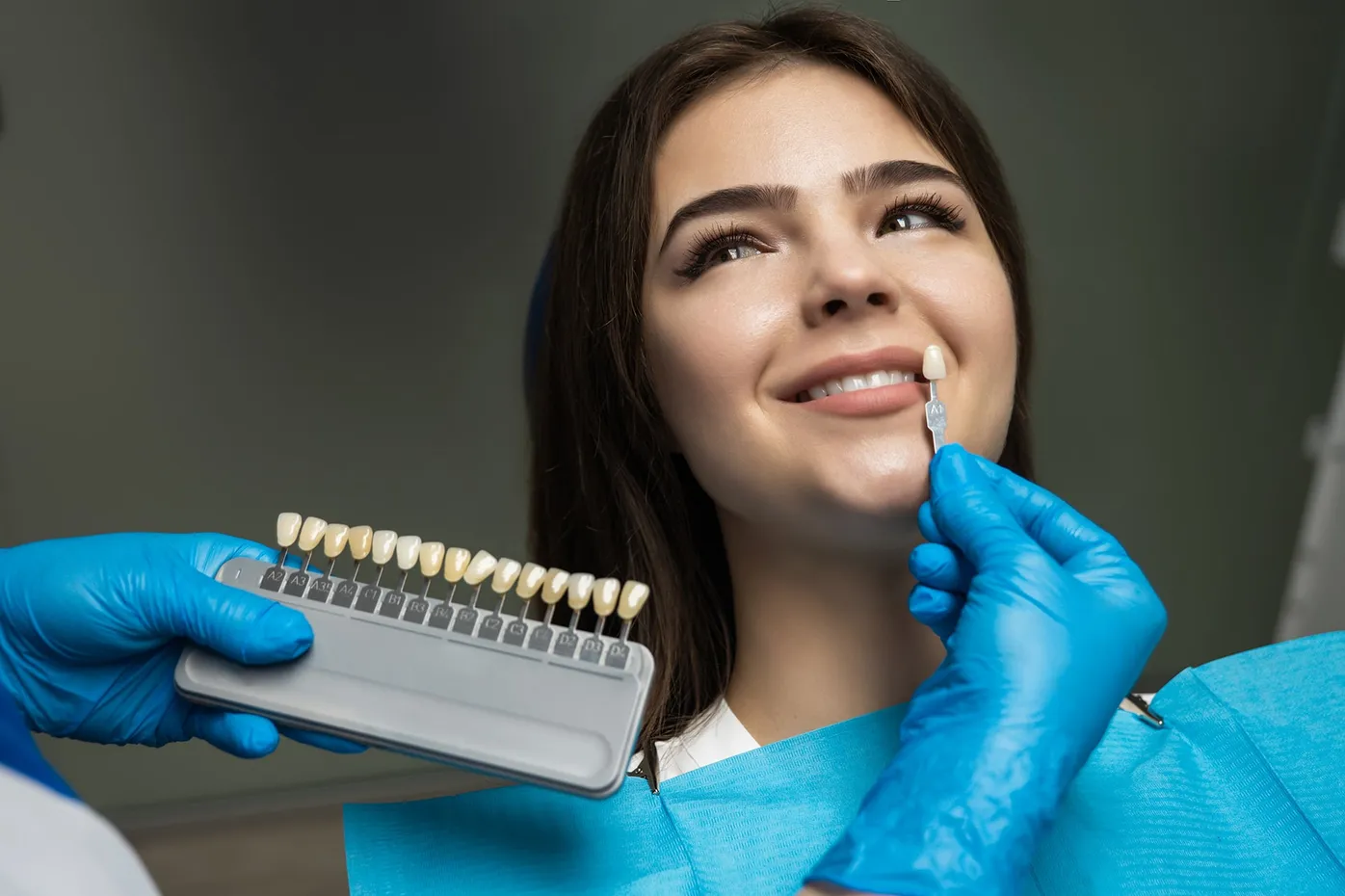
What Are Porcelain Veneers?
Porcelain veneers are thin, custom-made restorations that are placed on the front surfaces of teeth. They are designed to improve the appearance of teeth by changing their color, shape, size, symmetry, or overall proportion.
Veneers are often used for teeth that are discolored, worn, chipped, uneven, slightly gapped, or not shaped the way the patient prefers. Because veneers cover the visible front surface of the tooth, they can create a more uniform smile when several teeth are treated together.
Porcelain is commonly chosen because it can create a natural-looking appearance and is designed to reflect light in a way that resembles tooth enamel. Patients interested in dental veneers and laminates should start with a consultation to determine whether their teeth and gums can support veneer treatment.
What Is Dental Bonding?
Dental bonding is a cosmetic treatment that uses tooth-colored composite resin to repair or reshape a tooth. The resin is applied directly to the tooth, shaped by the dentist, hardened, and polished so it blends with the surrounding smile.
Bonding may be used for minor chips, small gaps, uneven edges, discoloration, or slight shape concerns. It is often a more conservative option than veneers because it may require little to no removal of natural tooth structure, depending on the case.
Dental Design Studios provides dental bonding for patients who want to improve specific cosmetic concerns. Bonding can be a good option when the change needed is small, focused, and appropriate for the tooth’s location and bite forces.
The Main Difference Between Veneers and Bonding
The biggest difference between veneers and bonding is the material and how the treatment is completed. Veneers are custom restorations, often made from porcelain, that are designed outside the mouth and bonded to the front of the teeth. Bonding uses composite resin that is shaped directly on the tooth during the appointment.
Veneers are often used for more noticeable or comprehensive cosmetic improvements. They can change several aspects of a smile at once, including tooth color, shape, length, and symmetry. Bonding is usually best for smaller changes, such as repairing one chipped tooth or closing a minor space.
Another difference is durability. Porcelain veneers are generally more resistant to staining than composite resin, while bonding may be more likely to stain or chip over time. However, bonding may be easier to adjust or repair in certain cases. Your dentist can explain how each option may hold up based on your habits, bite, and treatment goals.
When Porcelain Veneers May Be Recommended
Porcelain veneers may be recommended when a patient wants to improve several visible teeth or make a more dramatic cosmetic change. They can be helpful for teeth that are deeply discolored, worn down, uneven, slightly misaligned, or different in size or shape.
Veneers may also be considered when whitening or bonding would not provide the desired result. For example, some stains do not respond well to whitening. In those cases, veneers may be an option for creating a more consistent tooth color.
A dentist must also evaluate whether the teeth are healthy enough for veneers. Cavities, gum disease, bite problems, or significant enamel loss may need to be addressed first. Cosmetic treatment works best when the teeth and gums have a healthy foundation.
When Dental Bonding May Be Recommended
Dental bonding may be recommended for smaller cosmetic concerns. If one tooth has a small chip, a slightly uneven edge, or a small area of discoloration, bonding may be a practical option.
Bonding may also be useful when a patient wants a conservative treatment with less preparation. Since the composite resin is applied directly to the tooth, bonding can often be completed efficiently and may be appropriate for minor repairs.
However, bonding is not always the best choice for larger cosmetic changes. If several teeth need to be lengthened, reshaped, brightened, or made more symmetrical, veneers may provide a more predictable cosmetic result. Your dentist can help you understand where bonding may work well and where another option may be more appropriate.
Appearance and Smile Goals
Both veneers and bonding can improve the appearance of teeth, but they are often used for different levels of change. Bonding is usually ideal for subtle improvements. It can blend into the smile when the goal is to repair or refine a small area.
Veneers can provide a more comprehensive smile transformation. Because they are custom-made, veneers can be designed to create a coordinated look across several teeth. This may be helpful for patients who want to improve tooth shape, color, spacing, and symmetry together.
The right choice depends on what bothers you most about your smile. If you only want to correct one small chip, bonding may be enough. If you want to change the overall appearance of your front teeth, veneers may be worth discussing.
Tooth Preparation and Conserving Natural Structure
Tooth preparation is another important difference. Dental bonding often requires little preparation, depending on the case. The dentist may lightly roughen the tooth surface so the composite resin can bond properly, then shape the material directly on the tooth.
Porcelain veneers may require more preparation because the restoration needs space to fit naturally over the tooth. In many cases, a small amount of enamel is removed from the front surface of the tooth. This helps the veneer avoid looking bulky and allows it to blend with the smile.
Because enamel does not grow back, veneer treatment should be carefully planned. Patients should understand what is involved before moving forward. Your dentist can explain whether veneers, bonding, or another cosmetic option would be more conservative for your specific teeth.
Strength, Staining, and Long-Term Maintenance
Porcelain veneers and dental bonding both need ongoing care, but they do not age in exactly the same way. Porcelain is typically more resistant to staining than composite resin. This can make veneers a strong option for patients who want longer-lasting color stability.
Bonding can still look very natural, but composite resin may stain over time, especially with frequent exposure to coffee, tea, red wine, tobacco, or highly pigmented foods. Bonding may also chip or wear more easily than porcelain in some situations.
Neither option is indestructible. Patients should avoid chewing ice, biting fingernails, opening packages with their teeth, or using teeth as tools. Regular dental visits help your dentist monitor cosmetic restorations and recommend maintenance or repairs when needed.
Timeline and Appointment Expectations
Dental bonding can often be completed in one visit, depending on how many teeth are being treated and how complex the changes are. The dentist applies the composite resin, shapes it, hardens it, and polishes it during the appointment.
Veneers usually require more planning. The process may include a consultation, smile design, tooth preparation, impressions or digital scans, temporary restorations when needed, and final placement. Some same-day options may be available for certain veneer cases, depending on the materials, technology, oral health, and treatment complexity.
Dental Design Studios provides same-day dentistry for certain procedures, including some veneers and dental bonding, but same-day care is not appropriate for every patient or every cosmetic goal. A consultation is needed to determine what timeline makes sense.
Which Option Is Better for Chipped Teeth?
For a small chip, dental bonding may be a good option. The dentist can apply composite resin to the chipped area, shape it to match the tooth, and polish it so it blends with the smile.
For larger chips, repeated chips, or teeth with more extensive damage, veneers or crowns may be discussed. The right option depends on how much structure is missing, where the chip is located, and how much pressure the tooth handles when biting.
If a chipped tooth is painful, sensitive, cracked, or caused by trauma, it should be evaluated before cosmetic treatment is planned. The dentist needs to make sure the tooth is healthy enough for bonding or veneers.
Which Option Is Better for Gaps?
Both bonding and veneers can sometimes be used to improve the appearance of small gaps between teeth. Bonding may be appropriate for a minor space when only a small amount of material is needed.
Veneers may be considered when gaps are larger, multiple spaces are present, or the patient wants to improve tooth shape and color at the same time. Since veneers are custom-made, they can help create more balanced proportions across the front teeth.
In some cases, orthodontic treatment may be a better option than either bonding or veneers. If the spacing is related to bite alignment or tooth position, your dentist may recommend Invisalign, clear braces, or another orthodontic evaluation before cosmetic treatment.
Which Option Is Better for Discoloration?
The best option for discoloration depends on the type and depth of staining. Surface stains may respond well to professional teeth whitening. However, whitening does not change the color of fillings, crowns, veneers, or bonding.
Dental bonding may be used to cover a small discolored area, but it may not be ideal for widespread discoloration across several teeth. Since composite resin can stain over time, maintenance may be needed.
Veneers may be recommended when discoloration is deeper, more severe, or does not respond well to whitening. They can create a more consistent color across treated teeth. Your dentist can help determine whether whitening, bonding, veneers, or another option best fits your smile.
Bite and Oral Health Considerations
Cosmetic dentistry should never focus only on appearance. Your dentist also needs to evaluate your bite, gum health, enamel, tooth structure, and any signs of grinding or clenching.
Patients who grind their teeth may place extra stress on bonding or veneers. In some cases, a night guard may be recommended to help protect cosmetic dental work. If the bite is uneven, adjustments or other treatment may be needed before final cosmetic work is completed.
Gum health also matters. Red, swollen, or bleeding gums can affect the appearance and longevity of cosmetic treatment. If gum disease is present, it should usually be addressed before veneers or bonding are placed.
How To Choose Between Veneers and Bonding
The best way to choose between veneers and bonding is to start with a cosmetic consultation. During the visit, your dentist can examine your teeth and gums, discuss your goals, and explain which options may be realistic for your smile.
If you want a small repair, bonding may be the simpler and more conservative option. If you want a more complete smile enhancement, veneers may provide better control over shape, color, and symmetry.
It can also help to think about your long-term expectations. Are you looking for a quick repair? A more dramatic smile change? A conservative option? A longer-lasting cosmetic result? Your answers can help guide the conversation.
Caring for Veneers or Bonding
After veneers or bonding, good home care is essential. Brush twice daily, floss consistently, and keep up with routine dental cleanings and exams. Cosmetic restorations still depend on healthy teeth and gums.
Avoid habits that can damage restorations, such as chewing ice, biting hard objects, or using teeth to tear packaging. If you grind or clench your teeth, ask your dentist whether a night guard may be recommended.
Regular dental visits allow your dentist to check the condition of veneers, bonding, surrounding teeth, and gum tissue. Early maintenance can help protect your smile and address small concerns before they become larger problems.
Cosmetic Dentistry in the Greater Phoenix Area
Porcelain veneers and dental bonding can both improve the appearance of your smile, but they are used for different needs. Bonding may be a good fit for smaller chips, gaps, or shape concerns, while veneers may be better for more comprehensive improvements in color, size, shape, and symmetry.
The right option depends on your oral health, cosmetic goals, bite, enamel, and the amount of change you want to make. Dental Design Studios provides cosmetic dentistry for patients throughout the Greater Phoenix area and can help you compare your options with a personalized consultation.
To take the next step, contact your local Dental Design Studios office to schedule an appointment.
Dental Care Across the Greater Phoenix Area
Dental Design Studios has nine convenient dental office locations throughout the Greater Phoenix area, making it easier for patients to access quality dental care close to home. Our offices serve patients in Avondale, Chandler, Glendale, Phoenix, Peoria, Gilbert, Scottsdale, and nearby communities.
Find a Dental Design Studios location near you:
- Apple Tree Dental Studio in Avondale
- Arizona Family Dental in Chandler
- 75th Ave Dental Studio in Glendale
- Happy Valley Dental Studio in Phoenix
- Hatcher Dental Studio in Phoenix
- Smile Dental Studio in Phoenix
- Thunderbird Dental Studio in Peoria
- Dental Design Studio in Gilbert
- Scottsdale Dental Studio in Scottsdale